


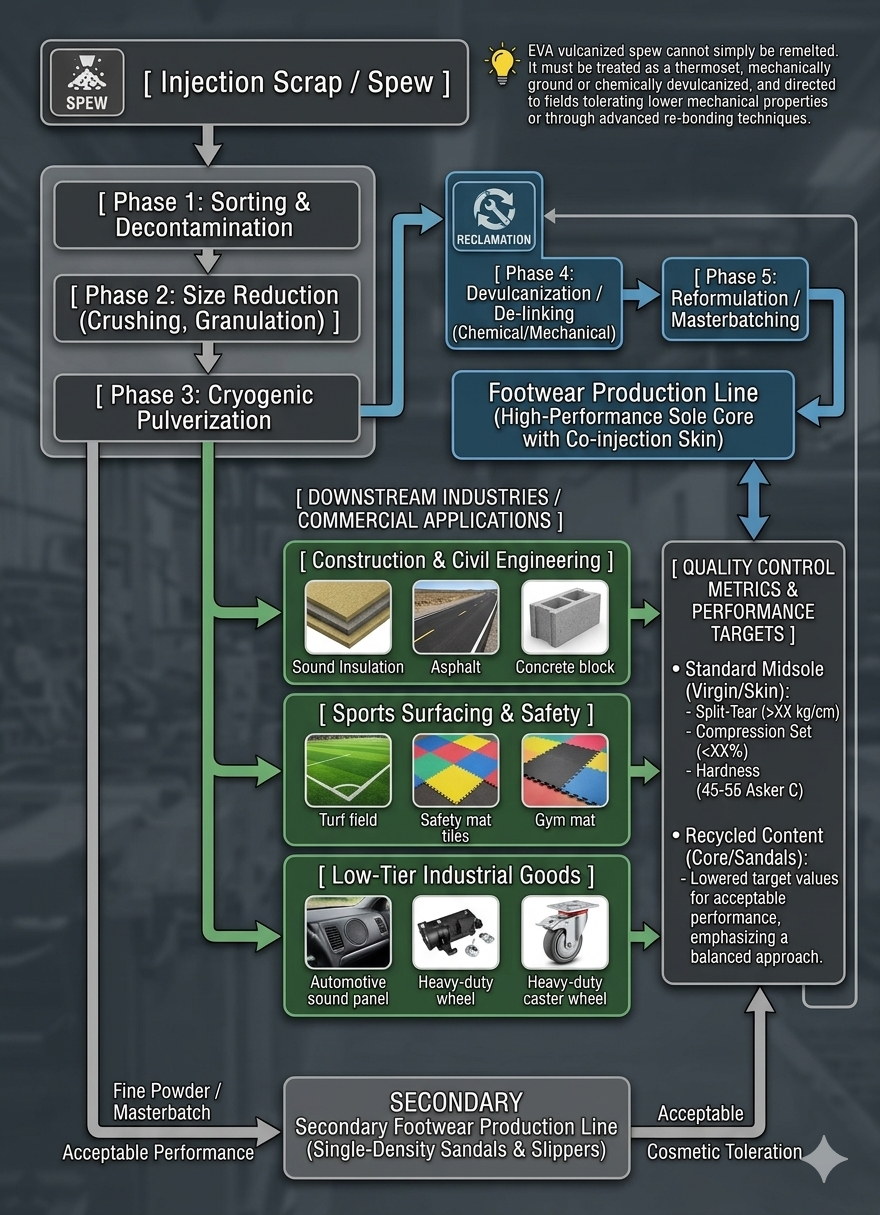


This is a classic industrial optimization and waste-valorization problem. In large-scale EVA (Ethylene-Vinyl Acetate) injection molding or compression molding (such as in rapid-production shoe factories), spew (the excess material from flash, vents, sprues, and runners) is generated in massive quantities.
Because footwear EVA is typically cross-linked (vulcanized) using peroxide agents (like DCP) to give it that necessary bouncy, elastic foam structure, it becomes a thermoset-like material. Once cross-linked, it cannot simply be remelted and tossed back into the virgin batch without severely degrading the mechanical properties (split tear, compression set, and shrinkage) of the high-end shoes.
If your rapid shoe production line is buried under tons of EVA spew, you cannot easily loop it back into the primary production line. Instead, you must look downstream to industries that tolerate lower mechanical properties, or use advanced reclamation technologies.
Here is a comprehensive breakdown of how to utilize, upcycle, and monetize EVA spew.
1. Mechanical Downcycling & Downstream Industries
The most common industrial approach is to mechanically grind the spew into a fine powder or crumb and sell or divert it to fields where high-performance elasticity and perfect cosmetics aren’t mandatory.
A. Construction and Civil Engineering
- Acoustic Insulation Underlayment: Ground EVA foam has excellent sound-dampening properties. It is blended with binders to create underlayment sheets for hardwood or laminate flooring in building construction.
- Asphalt and Bitumen Modification: Fine EVA spew powder can be blended into asphalt mixtures for road construction. The polymer modifies the bitumen, improving resistance to rutting and thermal cracking.
- Lightweight Concrete Aggregates: Grinded EVA can replace a portion of traditional aggregates (like sand or gravel) to produce lightweight, semi-insulating concrete blocks or panels.
B. Sports Surfacing, Playground Safety, & Turf
- Artificial Turf Infill: Instead of traditional SBR (crumb rubber from old tires, which has environmental and health scrutiny), washed and granulated EVA spew makes an excellent, clean, non-toxic infill for synthetic sports fields.
- Playground Safety Mats: The spew is shredded, mixed with a polyurethane binder, and compression-molded into shock-absorbing tiles or poured-in-place safety flooring for children’s parks.
- Interlocking Gym Mats: Lower-grade gym tiles and martial arts mats can tolerate a incredibly high percentage (often up to 30–50%) of recycled cross-linked EVA crumb.
C. Low-Tier Industrial Goods
- Automotive Sound Deadening: Used in the automotive aftermarket or heavy machinery sector for under-hood or interior cabin soundproofing panels.
- Industrial Wheels and Solid Tires: Castor wheels for shop carts or lawnmowers can utilize filled EVA compounds where performance metrics are low.
2. Advanced Chemical & Thermal Reclamation (Devulcanization)
If you want to feed the spew back into your own EVA compounding or sell it back to high-value plastics compounders, you have to break or bypass the cross-linked chemical bonds.
A. Supercritical Fluid (SCF) Gas Foaming Re-utilization
Modern recycling setups use Supercritical CO_2 or Nitrogen technology. The EVA spew is mechanically pulverized into a very fine powder, blended with a small amount of virgin thermoplastic carrier resin, and re-foamed using gas injection rather than chemical blowing agents. This bypasses some of the limitations of the dead cross-linked bonds.
B. Chemical and Mechanical Devulcanization
- Shear-Induced Devulcanization: Passing the spew through high-shear twin-screw extruders or specialized continuous mixers at tightly controlled temperatures can mechanically break the cross-link networks (C-C or C-O bonds) without entirely destroying the main polymer chain.
- Chemical De-linking Agents: Introducing specific recycling additives (like mercaptans or specialized disulfides) during the compounding of the scrap can help cleave the peroxide cross-links, rendering the powder semi-thermoplastic again.
3. Optimizing In-House Blending (How to use it back in Footwear)
If you absolutely must reuse it within your compound batch production, you cannot use it in high-performance midsoles, but you can target other components:
- The “Sandwich” Co-injection Method: Use a multi-station injection machine to create a dual-density structure. The inner core of the sole can contain 15–20% recycled spew powder, while the outer skin is 100% virgin EVA for pristine cosmetics and wear resistance.
- Slippers and Cheap Footwear: Divert the spew to secondary production lines for low-cost, single-density injection slippers or sandals, where shrinkage variations and minor cosmetic flaws are acceptable to the consumer market.
- Internal Reinforcements: Use the regrind for internal footbeds, heel counters, or insoles that are covered by fabric linings, where surface finish doesn’t matter.
Summary Matrix: Best Fields for EVA Spew Disposal
| Strategy | Target Field / Product | Processing Required | Economic Value |
|---|---|---|---|
| Mechanical Downcycling | Sports Turf Infill, Gym Mats, Playground Tiles | Heavy Crushing & Granulation | Low to Medium |
| Civil Engineering | Acoustic Underlayment, Asphalt Modifier | Fine Pulverization (<40 mesh) | Medium |
| In-house Recycling | Low-tier Slippers, Insole Boards, Inner Cores | Micronization + Blending (Max 10-15%) | High (Saves Virgin Material) |
| Chemical Reclamation | Devulcanized Thermoplastic Elastomers (TPE) | Twin-screw High-Shear Extrusion | High (Technical Setup Required) |


