















.jpg?w=218&resize=218,150&ssl=1 "UNESCO Zollverein Coal Mine Industrial Complex & Other Things to do in Essen, Germany | My Travelogue")












The Ancient Kosala Kingdom and the Modern Sundargarh District of Odisha: A Historical Continuum
The land of Odisha, once known by various names such as Kalinga, Utkala, and Odra, holds a rich tapestry of history, with its roots stretching back to ancient kingdoms and powerful dynasties. Among these, the Kosala Kingdom, particularly its southern branch, holds a special significance for its deep connection to the modern-day Sundargarh district. While the name “Kosala” often brings to mind the northern kingdom of Lord Rama, a separate and equally influential Southern Kosala flourished in central India, encompassing parts of modern-day Odisha, Chhattisgarh, and Madhya Pradesh. This historical link provides a fascinating lens through which to view the evolution of Sundargarh from a tribal heartland to a burgeoning industrial hub.
The Rise and Fall of the Southern Kosala Kingdom
The Southern Kosala, or Dakshina Kosala, emerged as a prominent political and cultural center around the 6th century BCE. Its capital, initially believed to be Sripura (modern Sirpur in Chhattisgarh), shifted over time. The kingdom was strategically located, controlling vital trade routes that connected northern and southern India. This geographical advantage contributed to its prosperity and allowed for the flourishing of art, religion, and commerce. The kingdom was a significant center for Buddhism, Jainism, and Hinduism, with numerous monasteries, stupas, and temples dotting its landscape.
The Megalithic period in the region, characterized by large stone monuments, provides some of the earliest archaeological evidence of settled communities. Later, the area came under the influence of the Mauryan Empire, and its rich mineral resources, especially iron ore and coal, were likely exploited for the imperial treasury. After the decline of the Mauryas, Southern Kosala witnessed the rise of local dynasties, including the Satavahanas and the Guptas. The Gupta period, often referred to as the Golden Age of India, saw a significant artistic and intellectual renaissance in the kingdom. The magnificent rock-cut caves of Udayagiri and Khandagiri in Odisha, though not in Sundargarh, are a testament to the artistic fervor of the era.
The most powerful rulers of Southern Kosala were the Somavamsi dynasty (also known as the Panduvamsis), who ruled from the 9th to the 12th century CE. They were great patrons of art and architecture, responsible for constructing some of the most exquisite temples in the region, including the Ram Mandir and Sivani Mandir in the Sundargarh area. Their rule marked a period of cultural synthesis, blending indigenous traditions with mainstream Hindu religious practices. The Somavamsi kings also played a pivotal role in the development of irrigation systems and agrarian economies, contributing to the overall prosperity of the kingdom.
The decline of the Southern Kosala Kingdom was a gradual process, primarily triggered by internal conflicts and external pressures from powerful neighbors like the Eastern Ganga dynasty and the Kalachuris. By the 12th century, the kingdom fragmented into smaller principalities, paving the way for the emergence of new regional powers. However, the cultural and social legacy of Kosala endured, influencing the customs, traditions, and administrative systems of the subsequent rulers.
Sundargarh: From Princely State to Modern District
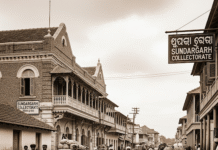
The modern Sundargarh district is located in the northwestern part of Odisha. Its history as a distinct political entity can be traced back to the British colonial period. The district was formed by merging two former princely states, Gangpur and Bonai, after India’s independence in 1947. The name “Sundargarh” is a compound of “Sunder” (beautiful) and “Garh” (fort), a fitting description for a region blessed with picturesque hills, dense forests, and meandering rivers.
The district’s pre-modern history is characterized by the rule of local tribal chieftains and smaller princely states. The Gangpur state, in particular, had a long history of tribal governance, primarily by the Gond and Bhuyan communities. These rulers maintained a delicate balance of power with neighboring states and the central authorities, often resisting external incursions.
The arrival of the British in the 19th century brought significant administrative and economic changes. The colonial government, seeking to exploit the region’s vast mineral resources, introduced modern infrastructure, including roads and railways. The discovery of rich iron ore, manganese, and dolomite deposits transformed the district’s economic landscape. The establishment of the Rourkela Steel Plant in the 1950s, a joint venture between the Indian government and West Germany, marked a turning point in Sundargarh’s history. It catapulted the district into the forefront of India’s industrial map, attracting a large migrant population and fostering rapid urbanization.
Today, Sundargarh stands as a microcosm of modern Odisha—a blend of ancient heritage and industrial dynamism. It is home to a diverse population, with a significant percentage of scheduled tribes like the Mundas, Oraons, and Kharias, who have preserved their unique cultural practices, languages, and art forms. The district’s economy is now heavily reliant on mining and steel production, but agriculture, forestry, and small-scale industries also play a vital role. The region’s natural beauty, including the Mandira Dam and the Vedvyas Cave, continues to attract tourists and nature enthusiasts.
Historical Echoes and Modern Realities
The link between ancient Kosala and modern Sundargarh is not just a matter of geographical proximity; it is a story of cultural continuity. The tribal communities of Sundargarh, with their rich folklore and oral traditions, may hold unwritten memories of the Kosala period. The religious sites and historical monuments scattered across the region serve as tangible reminders of a glorious past. The ancient trade routes that crisscrossed Kosala have been replaced by modern highways and railway lines, but they still serve the fundamental purpose of connecting communities and facilitating commerce.
The challenges facing modern Sundargarh are also a reflection of its historical trajectory. The rapid industrialization has led to environmental concerns, displacement of tribal communities, and social tensions. Balancing economic growth with environmental sustainability and social justice is the central challenge for the district’s future. The historical narrative of Southern Kosala, with its periods of prosperity and decline, offers valuable lessons in governance, resource management, and cultural preservation.
In conclusion, the journey of Sundargarh from the ancient Kosala kingdom to a modern industrial district is a testament to the resilience and adaptability of its people. It is a story of how a land of ancient forts and tribal customs embraced the era of steel plants and urbanization, all while holding onto its unique cultural identity. The historical echoes of Kosala resonate in the modern realities of Sundargarh, reminding us that the past is not a distant memory but a living, breathing part of the present.
Disclaimer
This article is for informational and educational purposes only. The information contained herein is based on historical records, archaeological findings, and scholarly interpretations. While every effort has been made to ensure accuracy, the field of historical study is constantly evolving, and new discoveries may alter our understanding of past events. The author and publisher do not assume any responsibility for errors or omissions. The views and opinions expressed in this article are solely those of the author and do not represent any official position or endorsement. This content should not be used as a substitute for professional advice, nor should it be relied upon for making any decisions. The user is encouraged to conduct their own research and consult with qualified experts for any specific needs or inquiries.