When visitors see our garden renovation, one of their first positive comments is about the gabion retaining walls. We agree. For high design impact at low cost, the gabions – the stone-filled wire baskets shown above from our window on a rainy day – were among our most satisfying decisions.
Other options for the garden walls ranged from cheap (cementing the old limestone pavers that gravity once held perilously together) to expensive (standard preformed concrete blocks). The gabions were affordable, and combined design flexibility with idiot-proof – if labour-intensive – installation.
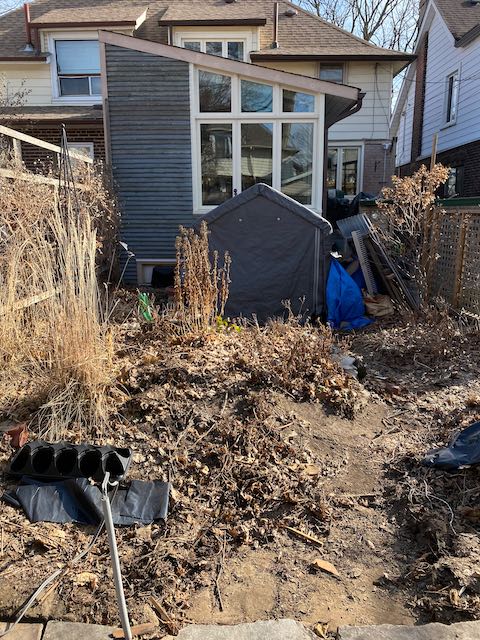
But first, we had to pave the area they’d sit on. Once filled, they’d be heavy. Here are the “before” pics.
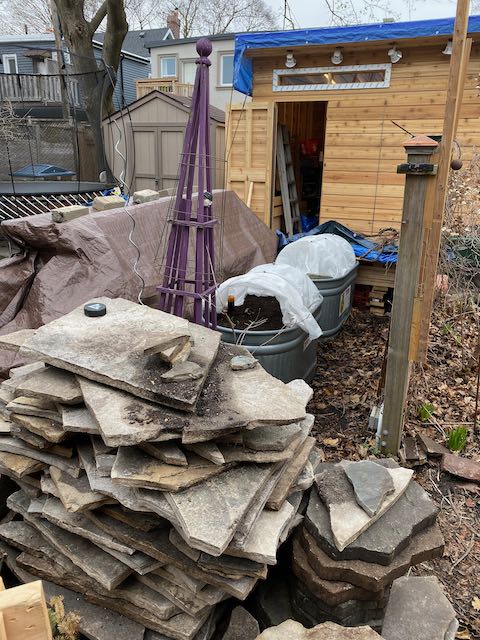
We had to swap things around. From the back of the driveway where our new shed would go, we had salvaged a stack of old pavers. The new shed used a different foundation. Then, to enlarge the patio area, we had to relocate a garden bed to the former site of the old shed.
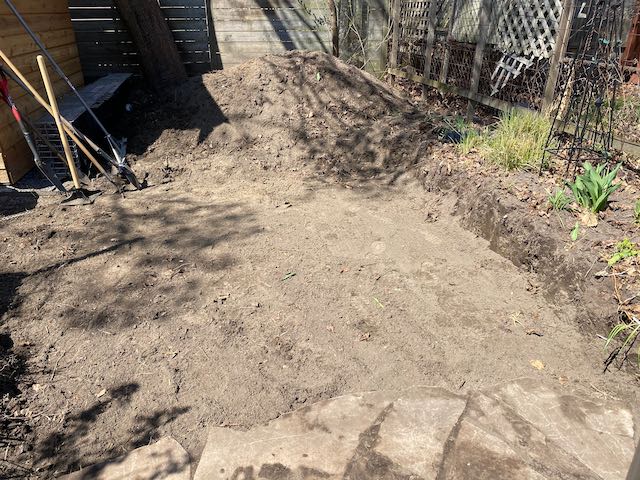
Now we had space for a larger patio. The area had to be graded so that any rain wouldn’t run towards the house. A laser level and staked line of string guided the adjustments. Where change was restricted by the remaining driveway, we sloped the grade into the garden and away from the building.
With this done, we could prepare to pave. Using a flat-bottomed tamping tool, the cleared, graded earth was pounded firm. Gravel was added and pounded again. Then, like a heavy jigsaw puzzle, the patio was built using the old pavers, with gritty sand swept between to lock the stones in place.

The basket kits, which we ordered from Gabion Canada, arrive flat-packed with separate sides, tops/bottoms, ends, and spiral fasteners. We bought two sizes (all sizes in Imperial), 20″H x 12″W x 40″L and 12″H x 12″W x 40″L – more on sizes shortly. After filling (3-6″ river stone; an inexpensive choice), the top shuts with spirals fastening ends and sides. The spiral fasteners can potentially be undone to add stones if things settle.
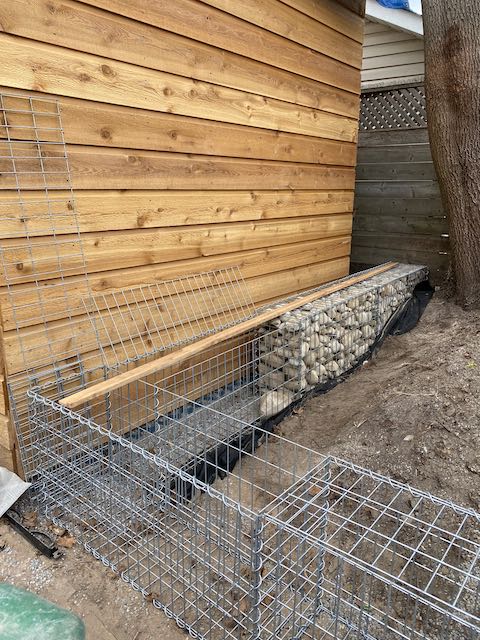
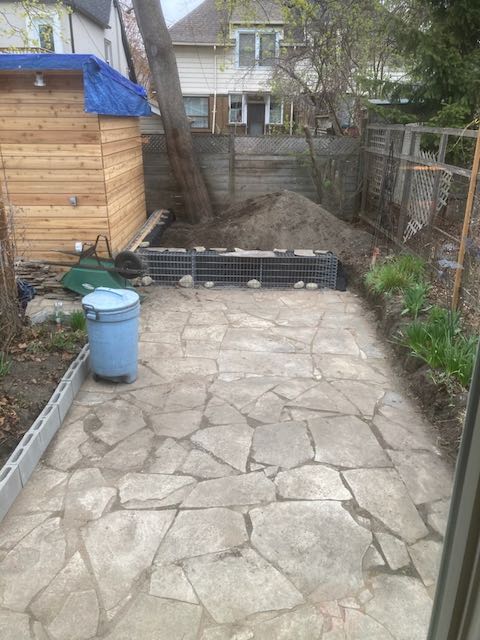
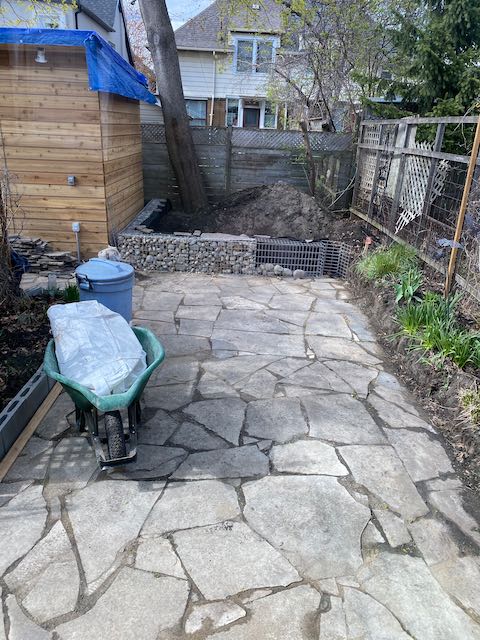
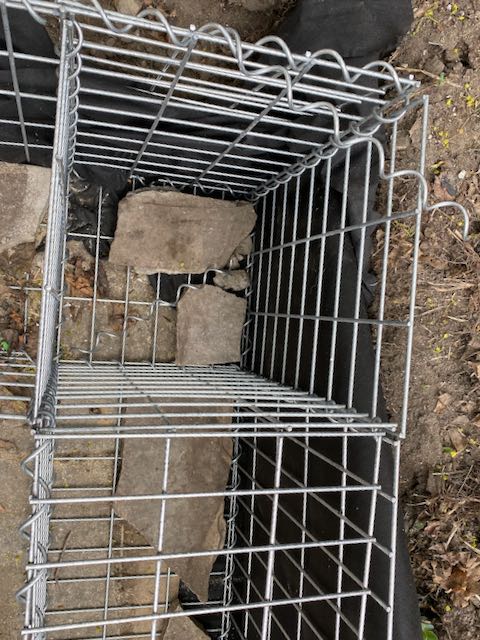
Starting in the back corner, the wire gabion baskets were cut at the base to fit around the roots of the maple tree, but keeping the tops level. The tree already sat at the height planned for the new back bed. The stones arranged in the cages leave large gaps for air.
The system is fairly forgiving. To extend the basketwork by one foot, for example, we created a square corner piece (above right) by setting a short basket on its end. A close look at that photo might reveal the difference in the direction of the wire rectangles. Those odd bits of paver at the bottom were too-small leftovers that padded our river stone, because we feared we might run out.
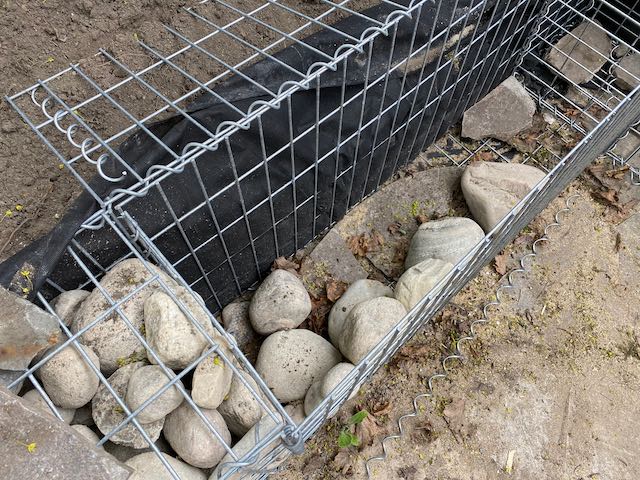
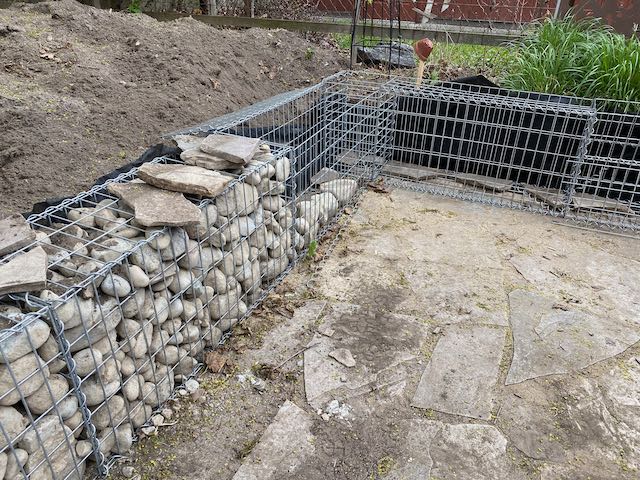
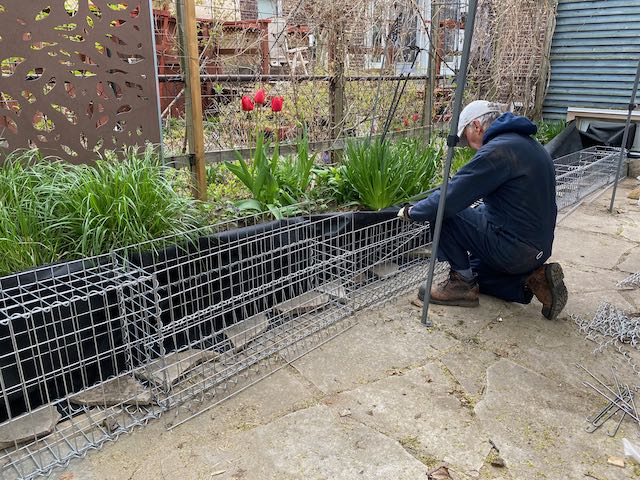
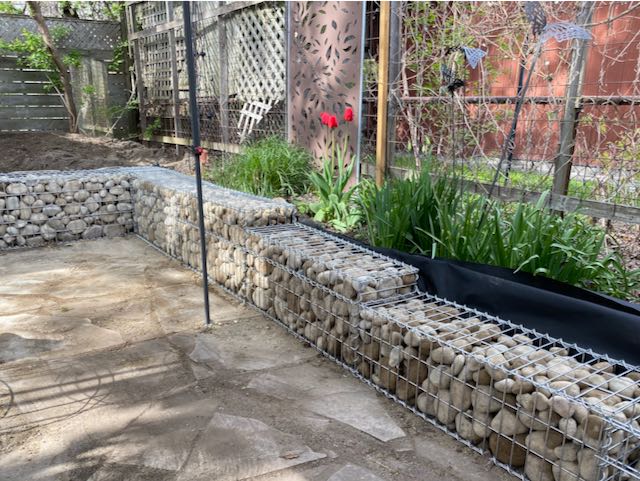
We did run out of stone for a while, and had a long wait for materials. When it arrived, it was unfortunately the wrong size – too small not to fall through the holes in the baskets. That put the project on hold for several weeks, but Mr. TG had plenty of other things to occupy him. Expanding the deck, for instance, moved up significantly in priority. In the end, we’re glad it did.

Again, wire cutters let us snip off a row and attach it to the top of the shorter basket to create an in-between height that stepped down to follow the slope of our our long, side bed. Because we didn’t have time to think about planting design, that bed stayed pretty much as before, with some plants randomly plonked in bare spots so they’d have a chance to survive. We’d think about them later!
Landscape cloth lined the garden side of the raised beds to prevent soil infiltrating the stonework.

We’re very pleased with the result. I love the feeling of sitting in a sunken garden. I love the garden benches we added on top. I find weeding (using a padded kneeler on top of the gabions) to be easier than ever. And though I love many other aspects of the gabions, there are a couple of things to note.
Every single stone had to be hand-placed by someone; two-thirds of the time, that someone was me. In total, about four tons of river rock! Gabion fronts and tops got most of the attention, selecting the better-looking rocks with the larger near the base. Paying someone else to do it would have been costly.
And while I’m hoping I can introduce plants into the rock work, I’m also hoping that unwanted plants won’t dig themselves in to all those nooks and crannies.
Time will tell! Do come back and see.
[Disclaimer: The content in this RSS feed is automatically fetched from external sources. All trademarks, images, and opinions belong to their respective owners. We are not responsible for the accuracy or reliability of third-party content.]
Source link