















.jpg?w=218&resize=218,150&ssl=1 "UNESCO Zollverein Coal Mine Industrial Complex & Other Things to do in Essen, Germany | My Travelogue")












Mukunda Harichandan, also known as Mukunda Deva, was the last independent Hindu ruler of Odisha, who came from a branch of the Chalukya dynasty. His reign marked a brief but significant period in the history of Odisha before the region fell under foreign rule.
A Brief but Significant Reign

Mukunda Harichandan’s rule from 1560 to 1568 CE was a short one, but he demonstrated remarkable military and administrative skills during this time. He was a descendant of the Eastern Chalukyas of Vengi and rose to power after overthrowing the last Bhoi ruler of Odisha. His lineage is often referred to as the “Chalukya dynasty” in the context of medieval Odisha history.
Key Aspects of his Rule
- Claim to the Throne: After the decline of the Gajapati Empire, a period of instability ensued. Mukunda Harichandan, who served as a minister under the Bhoi dynasty, took advantage of this political vacuum and seized the throne of Odisha.
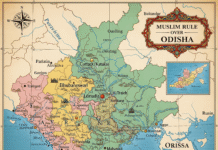
- Military Expansion: Mukunda Harichandan managed to revive the glory of the Odishan kingdom to a certain extent. He expanded his kingdom, with his control extending from the Ganges in the north to the Godavari river in the south.
- Conflicts with Bengal: His reign was defined by conflicts with the Sultan of Bengal, Sulaiman Karrani. These conflicts were often fueled by political rivalries and Mukunda Harichandan’s decision to provide shelter to a rival of the Bengal Sultan.
- Patronage of Culture and Religion: Like the previous rulers of Odisha, Mukunda Harichandan was a patron of Hinduism and the Jagannath cult. He is credited with building and renovating several structures, including a “Dola Mandap” at the Jagannath Temple in Puri.
The End of an Era
The end of Mukunda Harichandan’s reign marked a turning point in the history of Odisha. In 1568, while he was engaged in a conflict with the Bengal Sultan, one of his own generals, Ramachandra Bhanja, declared himself king. Mukunda Harichandan was killed in a battle against this internal rival, which led to the conquest of Odisha by the Afghans from Bengal. This event effectively ended Odisha’s long period of independence and its rule by indigenous Hindu dynasties.
Disclaimer
Important Notice Regarding Historical Content
The information presented on this blog is intended for general informational and educational purposes only. While we strive for accuracy, the historical accounts, timelines, and details about dynasties, rulers, and events, including the Chalukyas dynasty and figures like Mukunda Harichandan, are based on our current understanding of available historical sources.
History is a complex field with evolving interpretations. New archaeological discoveries, scholarly research, and differing academic perspectives may present alternative views or correct previously held beliefs. Therefore, the content on this blog should not be considered a definitive or authoritative historical record. We encourage readers to consult multiple sources and conduct their own research to form a comprehensive understanding of the topics discussed.
This blog is a personal project and does not represent the official views of any historical society, academic institution, or government body. We assume no responsibility or liability for any errors or omissions in the content provided, or for any actions taken based on the information presented here.