
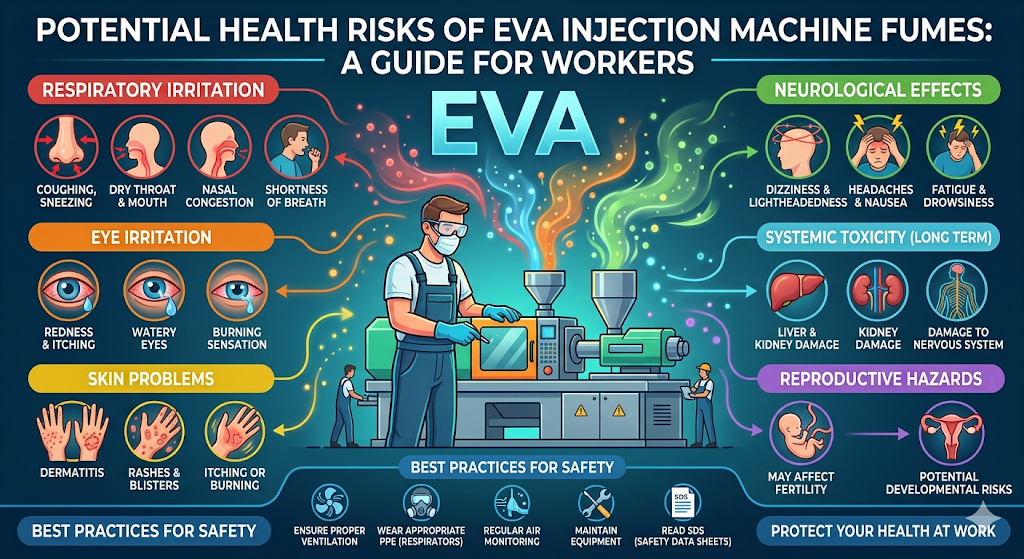
Eva (Ethylene Vinyl Acetate) is a versatile material commonly used in shoe manufacturing due to its lightweight and cushioning properties. While EVA itself is generally considered safe, the fumes generated during the injection molding process can pose potential health risks to workers. This guide aims to provide comprehensive information about these fumes, their potential health effects, and the necessary precautions workers should take.
Understanding the EVA Injection Process and Fumes
During the EVA injection molding process, the material is heated to a high temperature and injected into a mold to create the desired shoe shape. When the mold opens and the worker collects the shoe, the cooling EVA material releases various gases and vapors. These fumes can contain a mixture of volatile organic compounds (VOCs), potentially including:
- Acetaldehyde: A common VOC found in EVA fumes, known to cause respiratory irritation and potential eye problems.
- Formaldehyde: Another VOC that can be present, known for its strong odor and potential to irritate the eyes, nose, and throat.
- Other hydrocarbons and monomers: Depending on the specific EVA formulation and process parameters, other potentially harmful compounds may also be present.
Health Effects of Exposure to EVA Injection Machine Fumes
The inhalation of EVA fumes can lead to various short-term and long-term health effects, depending on the concentration of the fumes, the duration of exposure, and the individual’s susceptibility.
Short-term health effects:
- Respiratory irritation: EVA fumes can cause irritation to the nose, throat, and lungs, leading to symptoms like coughing, wheezing, shortness of breath, and sore throat.
- Eye irritation: Exposure to these fumes can cause redness, itching, burning, and tearing of the eyes.
- Headache and dizziness: The presence of certain VOCs can trigger headaches and dizziness in some individuals.
- Skin irritation: In case of skin contact with the fumes or residues, some workers may experience skin irritation, rash, or dermatitis.
Long-term health effects:
- Chronic respiratory problems: Prolonged exposure to high concentrations of EVA fumes can potentially contribute to the development of chronic respiratory conditions like bronchitis or asthma.
- Neurological effects: Some VOCs present in the fumes may have neurological effects with chronic exposure, though the specific impacts of EVA fumes on the nervous system require further research.
- Cancer risk: While there is limited information on the cancer risk associated specifically with EVA fumes, certain compounds found in these fumes, such as formaldehyde, are known carcinogens.
Precautions for Workers
To minimize exposure and protect their health, workers operating or working near EVA injection machines must strictly follow safety guidelines and precautions:
- Use proper respiratory protection: Wearing appropriate personal protective equipment (PPE), such as masks or respirators specifically designed to filter out VOCs, is crucial for protecting against fume inhalation.
- Ensure adequate ventilation: The workspace should have good ventilation systems, including local exhaust systems near the machine, to effectively remove fumes from the air.
- Maintain adequate personal hygiene: Washing hands thoroughly after handling materials or equipment can help prevent potential skin contact with residues or contaminants.
- Regular health check-ups: Workers should undergo regular medical check-ups to monitor for any potential health issues related to their exposure.
- Training and awareness: Workers must receive training on the potential health risks associated with EVA fumes and the proper use of protective measures.
Case Study: A Worker with 2 Years of Exposure
Consider the case of a worker, let’s call him Mark, who has been working as an EVA injection machine operator for the past two years. During this time, Mark has been exposed to the fumes generated by the machine daily, without always consistently using proper respiratory protection.
Symptoms and Health Issues:
Initially, Mark might experience mild and intermittent symptoms such as:
- Frequent coughing, especially during or immediately after his shift.
- Occasional shortness of breath during physically demanding tasks.
- Irritated, dry eyes and an itchy nose.
- A persistent, slight headache, particularly towards the end of the day.
Potential Long-term Health Consequences:
Over time, if left unaddressed, these initial symptoms could potentially progress and lead to more significant health problems:
- Development of Chronic Bronchitis: Constant irritation of the airways could lead to a chronic, productive cough and increased mucus production.
- Increased Risk of Asthma: The fumes might exacerbate underlying asthma or even cause new-onset occupational asthma.
- Long-term Effects: Continued exposure could potentially contribute to more serious health issues over time, although the specific risks would need further medical evaluation.
Conclusion and Recommendations
The fumes generated during the EVA injection molding process present significant health risks to workers. It is essential to recognize these risks and implement comprehensive safety measures to protect employees. This includes:
- Prioritizing the use of effective ventilation systems.
- Ensuring appropriate and properly fitted personal protective equipment.
- Providing thorough training on hazards and safe work practices.
- Encouraging regular health monitoring for workers.
By prioritizing worker safety and adhering to these precautions, manufacturing companies can minimize the risks associated with EVA fumes and ensure a healthier work environment.
Required Precautions
The “Cleaning the die” phase is the most dangerous because the worker’s face is usually closest to the mold.
- Engineering Controls (Priority): Install Local Exhaust Ventilation (LEV). This is a suction hood placed directly above or behind the die that pulls the gas away before it reaches the worker’s face.
- PPE: At a minimum, workers should wear N95 or P2 grade respirators (specifically those rated for organic vapors) and safety goggles. Standard surgical masks do not filter these chemical gases.
- Automated Cleaning: Using long-handled air nozzles or automated scrapers to keep the worker’s head further away from the open mold.
4. Dietary Considerations
Important Correction: No food can “remove” or “neutralize” inhaled toxic gases once they have entered the lungs or bloodstream. The idea that milk or specific foods act as a “filter” for industrial toxins is a common myth.
However, a company should provide specific nutrition to support the body’s natural detoxification organs (the liver and kidneys):
- Hydration: Constant access to clean water helps the kidneys flush out water-soluble metabolic byproducts of chemical exposure.
- Antioxidant-Rich Foods: Providing fruits (oranges, lemons) or vegetables high in Vitamin C and E can help combat the oxidative stress caused by chemical inhalation.
- High-Protein Meals: Sufficient protein supports liver enzymes (like Cytochrome P450) which are responsible for processing toxins like formamide.
The Human Resources Department will teach workers about the hazards of the gases released during the manufacturing process. The department will also provide training on the proper use of PPE and other safety precautions. The department will work to create a safe work environment for all employees. By taking these steps, the Human Resources Department will help protect the health of workers and maintain the company’s reputation.
Disclaimer
The information provided in this guide is for educational purposes only and should not be considered medical advice. If you have concerns about your health or potential exposure to hazardous substances, please consult a qualified healthcare professional.

36 Comments
Very interesting topic, thanks for putting up.
t98wip
Hello. fantastic job. I did not imagine this. This is a great story. Thanks!
You are my inspiration , I have few web logs and often run out from to brand.
I know this if off topic but I’m looking into starting my own blog and was curious what all is required to get setup? I’m assuming having a blog like yours would cost a pretty penny? I’m not very web smart so I’m not 100 positive. Any suggestions or advice would be greatly appreciated. Appreciate it
Great post. I was checking constantly this blog and I am impressed! Extremely useful information particularly the last part 🙂 I care for such info a lot. I was looking for this particular info for a long time. Thank you and good luck.
I rattling delighted to find this web site on bing, just what I was looking for : D too saved to favorites.
F*ckin’ awesome things here. I’m very glad to see your post. Thanks a lot and i am looking forward to contact you. Will you kindly drop me a mail?
I really appreciate this post. I’ve been looking all over for this! Thank goodness I found it on Bing. You have made my day! Thx again
Thank you for sharing superb informations. Your web site is so cool. I am impressed by the details that you’ve on this website. It reveals how nicely you perceive this subject. Bookmarked this website page, will come back for extra articles. You, my pal, ROCK! I found simply the information I already searched all over the place and just couldn’t come across. What an ideal website.
I was recommended this blog by my cousin. I’m no longer positive whether this put up is written by way of him as nobody else recognize such targeted about my difficulty. You’re amazing! Thank you!
I loved as much as you will receive carried out right here. The sketch is tasteful, your authored material stylish. nonetheless, you command get bought an impatience over that you wish be delivering the following. unwell unquestionably come further formerly again since exactly the same nearly a lot often inside case you shield this hike.
I got what you intend, thankyou for putting up.Woh I am happy to find this website through google. “Wisdom doesn’t necessarily come with age. Sometimes age just shows up by itself.” by Woodrow Wilson.
Heya i am for the first time here. I found this board and I in finding It really helpful & it helped me out a lot. I hope to offer one thing again and aid others like you helped me.
It’s really a nice and helpful piece of info. I’m glad that you shared this useful info with us. Please keep us informed like this. Thanks for sharing.
Hey just wanted to give you a quick heads up and let you know a few of the images aren’t loading properly. I’m not sure why but I think its a linking issue. I’ve tried it in two different web browsers and both show the same outcome.
I believe this web site has some very fantastic info for everyone :D. “Nothing surely is so disgraceful to society and to individuals as unmeaning wastefulness.” by Count Benjamin Thompson Rumford.
Greetings! Very helpful advice on this article! It is the little changes that make the biggest changes. Thanks a lot for sharing!
I loved as much as you will receive carried out right here. The sketch is attractive, your authored subject matter stylish. nonetheless, you command get bought an edginess over that you wish be delivering the following. unwell unquestionably come further formerly again since exactly the same nearly a lot often inside case you shield this hike.
Excellent goods from you, man. I’ve understand your stuff previous to and you’re just too excellent. I actually like what you have acquired here, really like what you are saying and the way in which you say it. You make it enjoyable and you still take care of to keep it wise. I cant wait to read much more from you. This is actually a tremendous site.
I genuinely enjoy reading through on this web site, it has got fantastic posts. “Literature is the orchestration of platitudes.” by Thornton.
Excellent weblog here! Additionally your website quite a bit up very fast! What host are you the use of? Can I get your affiliate link to your host? I wish my web site loaded up as quickly as yours lol
Yay google is my king assisted me to find this great web site! .
Thanx for the effort, keep up the good work Great work, I am going to start a small Blog Engine course work using your site I hope you enjoy blogging with the popular BlogEngine.net.Thethoughts you express are really awesome. Hope you will right some more posts.
Great post. I am facing a couple of these problems.
I am forever thought about this, appreciate it for posting.
Thanks a lot for sharing this with all of us you actually know what you’re talking about! Bookmarked. Kindly also visit my site =). We could have a link exchange arrangement between us!
Only wanna comment that you have a very nice internet site, I like the design and style it really stands out.
Hey there, You have done an incredible job. I will definitely digg it and personally suggest to my friends. I am confident they will be benefited from this web site.
I’d forever want to be update on new articles on this web site, saved to favorites! .
Thank you for sharing with us, I think this website genuinely stands out :D.
Hiya, I am really glad I have found this info. Today bloggers publish only about gossips and internet and this is really irritating. A good blog with interesting content, that’s what I need. Thank you for keeping this site, I’ll be visiting it. Do you do newsletters? Cant find it.
I’d incessantly want to be update on new articles on this internet site, saved to my bookmarks! .
For specialty matcha importers looking to manage their harvest seasons and track their tea grades, our specialized e-commerce platform provides automated harvest season tracking, tea grade inventory management, and seamless customer subscription, ensuring your customers receive the freshest matcha while allowing you to manage your imports smoothly without worrying about inventory spoilage ever again.
For circus performers looking to manage their act routines and track their equipment safety checks, our specialized performance platform provides automated routine logging, equipment safety check tracking, and seamless travel scheduling, ensuring your acts are safe and polished while allowing you to manage your career smoothly without worrying about equipment failures ever again.
For ski instructors looking to manage their lesson schedules and track their student progress, our specialized winter sports platform provides automated lesson scheduling, student progress tracking, and seamless resort integration, ensuring your lessons are effective and organized while allowing you to manage your season smoothly without worrying about scheduling conflicts ever again.