


The Comprehensive Guide to Regulatory Compliance: GST Suvidha Centers, Digital Signatures, and Corporate Governance
In the modern Indian economic landscape, the shift toward a digital-first regulatory environment has transformed how businesses interact with the government. The introduction of the Goods and Services Tax (GST) and the mandatory use of Digital Signature Certificates (DSC) for corporate filings have created a robust but complex ecosystem. Navigating these requirements demands precision, technical expertise, and a deep understanding of the legal frameworks involved.
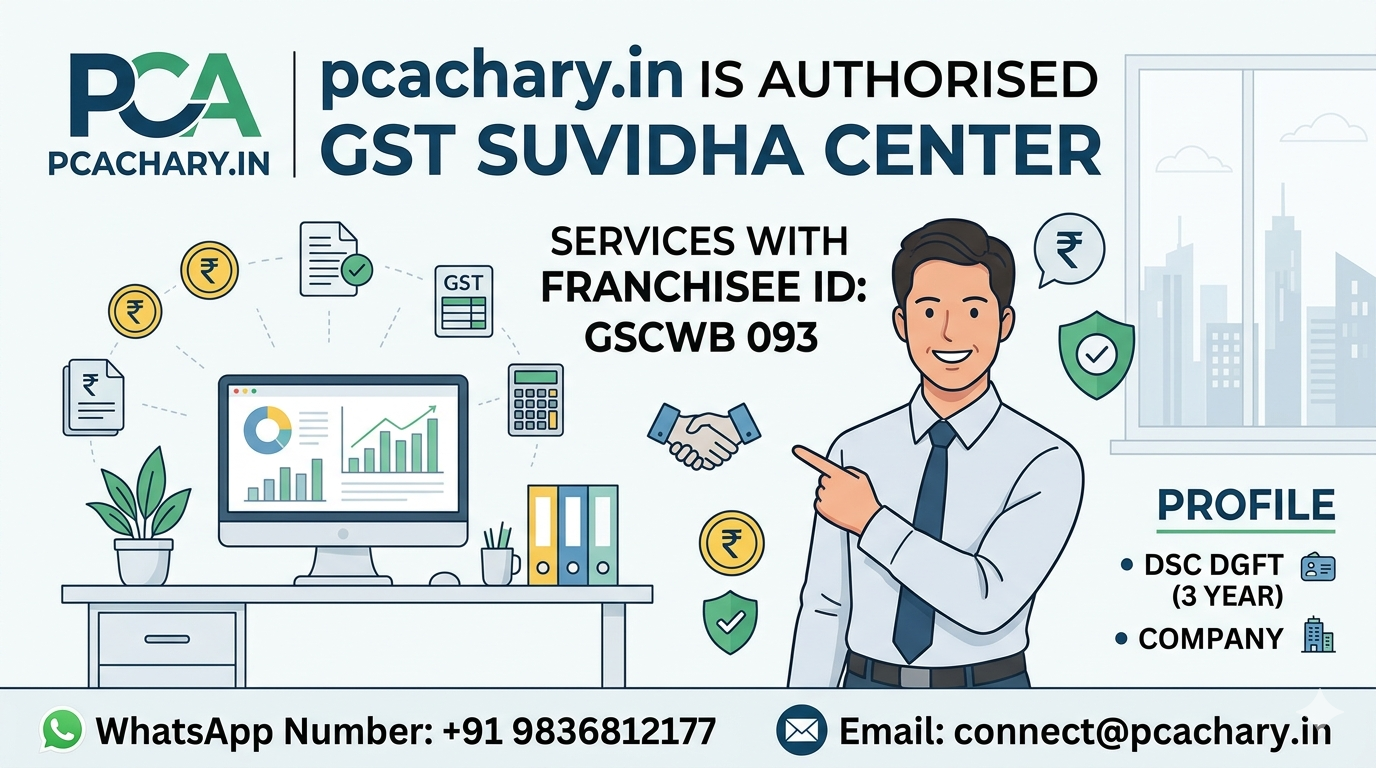
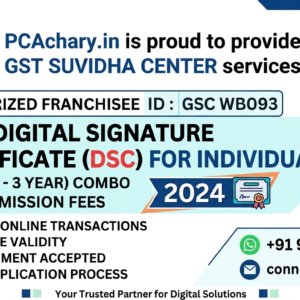
PCAchary serves as a vital bridge in this ecosystem, operating as an authorized GST Suvidha Center with Franchisee ID: GSC WB093. This guide explores the critical components of business compliance, focusing on GST services, the nuances of Digital Signatures for DGFT and corporate needs, and the lifecycle of company management.
Understanding the Role of a GST Suvidha Center (GSC)
A GST Suvidha Center is a strategic initiative designed to assist small and medium-sized enterprises (SMEs) and individual taxpayers in managing their GST-related obligations. While the GST portal is designed for self-service, many businesses find the technical requirements and frequent updates challenging.
The Functionality of GST Suvidha Centers
As an authorized center, PCAchary provides a simplified interface for taxpayers. The primary objective is to ensure that even a small business owner in a remote location can comply with the law without needing an expensive in-house accounting department.
- Registration and Documentation: The first step for any business crossing the turnover threshold is GST registration. This process involves uploading various documents, including PAN cards, proof of business address, and bank details. A GSC ensures these documents are accurate to prevent rejection by the tax authorities.
- Monthly and Quarterly Filings: GST is not a one-time task. It requires regular filings—GSTR-1 for outward supplies and GSTR-3B for summary returns. Errors in these filings can lead to mismatches in Input Tax Credit (ITC), causing financial friction between buyers and sellers.
- Reconciliation of ITC: One of the most complex aspects of GST is ensuring that the tax paid on purchases is correctly reflected in the GSTR-2B statement. Discrepancies here can lead to legal notices. Authorized centers use specialized software to reconcile these entries efficiently.
For personalized assistance with your GST compliance, you can visit the official website at pcachary.in or reach out directly via email at connect@pcachary.in.
Digital Signature Certificates (DSC): The Key to Digital Trust
As paper-based filing systems disappear, the Digital Signature Certificate (DSC) has become the standard for authenticating electronic documents. A DSC is essentially a digital version of a physical signature, backed by cryptographic security to ensure that the document has not been tampered with after signing.
DSC for DGFT (Directorate General of Foreign Trade)
For businesses involved in import and export, a specialized type of DSC is required for the DGFT portal.
- The 3-Year Validity Advantage: While many certificates are issued for shorter durations, a 3-Year DSC offers stability. It reduces the administrative burden of frequent renewals and ensures that your Import-Export Code (IEC) related activities are never stalled due to an expired certificate.
- Security and Legal Standing: Under the Information Technology Act, digital signatures are legally at par with physical signatures. For DGFT, they are used to sign license applications, track shipping bills, and manage the export-import benefits provided by the government.
Class 3 DSC for Company Incorporation and Filings
The Ministry of Corporate Affairs (MCA) requires a Class 3 DSC for directors and authorized signatories. This is the highest level of security available in India.
- Company Incorporation: From obtaining a Director Identification Number (DIN) to filing the Memorandum of Association (MOA) and Articles of Association (AOA), every step of starting a company is digital.
- Annual Filings: Every year, companies must file their balance sheets and annual returns. Without a valid DSC, these filings are impossible, leading to heavy penalties for “defaulting” status.
To secure your 3-year DSC or for help with DGFT applications, contact PCAchary via WhatsApp at +91 9836812177.
The Evolution of Corporate Governance in India
Starting a “Company” in India—whether it is a Private Limited, One Person Company (OPC), or Limited Liability Partnership (LLP)—is a statement of intent. It shows that a business is ready for scale and external investment. However, the regulatory burden increases significantly compared to a simple proprietorship.
1. Pre-Incorporation Planning
Before hitting the “submit” button on the MCA portal, entrepreneurs must decide on the capital structure and the division of shareholding. This stage requires a clear vision of the business’s long-term goals.
2. Compliance and Transparency
Post-incorporation, a company is a separate legal entity. This means the money in the business bank account belongs to the company, not the individual. Strict adherence to “Related Party Transactions” and “Board Meetings” is required. Professional service providers help maintain the “Minutes Book” and statutory registers that are mandatory under the Companies Act, 2013.
3. The Role of Technology in Governance
The government’s “Ease of Doing Business” initiative has introduced V3 of the MCA portal. While advanced, it requires high-speed connectivity and technical troubleshooting skills to navigate. Using an authorized service center like GSC WB093 ensures that technical glitches do not result in filing delays.
Why Choose PCAchary?
Operating under the franchisee ID GSC WB093, PCAchary combines local accessibility with professional-grade technical support. Whether you are a local trader needing GST returns or a large exporter requiring a DGFT DSC, the focus remains on accuracy and time-bound delivery.
Core Service Pillars:
- Accuracy: Reducing the “notice” culture by ensuring clean filings from the start.
- Longevity: Providing 3-year DSC solutions to keep your business running smoothly without interruption.
- Accessibility: Open lines of communication through modern digital channels.
For any inquiries regarding GST, DSC, or Company registration, you can explore the services at pcachary.in. For immediate support, email the team at connect@pcachary.in or call/WhatsApp at +91 9836812177.
The Road Ahead: Staying Compliant in a Changing Market
The regulatory environment in India is dynamic. With the introduction of E-Invoicing for smaller businesses and the integration of customs data with GST (GSTN), the margin for error is shrinking. Outsourcing these complexities to an authorized GST Suvidha Center allows business owners to focus on what they do best: growing their business.
Compliance is not just a legal requirement; it is a competitive advantage. A business with a clean GST record and up-to-date corporate filings is more likely to secure bank loans, attract investors, and build trust with large corporate clients.
Contact Details for PCAchary:
- Website: pcachary.in
- Email: connect@pcachary.in
- WhatsApp: +91 9836812177
- Franchisee ID: GSC WB093
By choosing a dedicated partner for your regulatory needs, you ensure that your business stands on a foundation of integrity and legal soundness. Whether it’s a 3-year DSC for DGFT or the complex world of GST, PCAchary is equipped to guide you through every step of the journey.
Reviews
There are no reviews yet.