


















.jpg?w=218&resize=218,150&ssl=1 "UNESCO Zollverein Coal Mine Industrial Complex & Other Things to do in Essen, Germany | My Travelogue")












The Sambalpur Uprising (1827-1864) A Prolonged Struggle for Sovereignty
The Sambalpur Uprising, a protracted and fierce rebellion against British rule, stands as one of the longest-lasting anti-colonial struggles in India. Spanning nearly four decades from 1827 to 1864, this armed resistance was primarily centered in the Sambalpur region of present-day Odisha. It was spearheaded by the legendary freedom fighter Veer Surendra Sai and his family, who led a broad coalition of local zamindars, gountias (village chiefs), and tribal communities against the British East India Company’s policies of annexation and exploitation.
The rebellion is particularly notable for its resilience, its deep-rooted causes, and its connection to the larger Indian Revolt of 1857. It’s a testament to the indomitable spirit of the people of Sambalpur and a crucial, though often overlooked, chapter in the history of India’s freedom struggle.
The Seeds of Revolt: Causes and Context
The roots of the Sambalpur Uprising were sown in a complex interplay of political, economic, and social factors that came to a head with the British takeover of the region.
Political and Dynastic Disputes
The immediate trigger for the rebellion was the succession crisis in the Chauhan dynasty of Sambalpur. After the death of Maharaja Jayant Singh, his son Maharaja Sai was installed as the ruler in 1820 by the British. When Maharaja Sai died childless in 1827, the British ignored the rightful claim of Surendra Sai, who was a direct descendant of the royal family. Instead, they installed the late king’s widow, Rani Mohan Kumari, as a puppet ruler. This act was in direct violation of the local tradition of a male-only succession, creating widespread resentment.
The situation worsened in 1833 when the British removed Rani Mohan Kumari and installed an old and unpopular zamindar, Narayan Singh, on the throne. Surendra Sai, then a young man of 18, became the face of the people’s protest. He was seen as the legitimate heir to the throne and a symbol of their sovereignty.
The Doctrine of Lapse
The final blow came in 1849 with the death of Narayan Singh, who also had no male heir. Lord Dalhousie’s infamous Doctrine of Lapse was invoked, and the British annexed Sambalpur, bringing the region under direct British rule. This move erased the possibility of Surendra Sai ever ascending the throne and solidified the political cause for the rebellion.
Economic and Social Exploitation
Beyond the dynastic disputes, British economic policies fueled the flames of discontent. The new administration:
- Imposed heavy and rigid land revenue taxes, replacing the traditional system and leading to the impoverishment of farmers and local landholders.
- Dispossessed local zamindars and gountias of their traditional rights and privileges, bringing them under rigorous British control.
- Allowed non-Odia officials and traders to exploit the local populace, particularly the tribal communities.
The British administration’s disregard for local customs and the overall climate of exploitation alienated a wide cross-section of society, from the royal family to the common man, and tribal groups like the Gonds and Binjhals.
Veer Surendra Sai: The Architect of Resistance
The rebellion is inextricably linked to the persona of Veer Surendra Sai. Born on January 23, 1809, he was a natural leader who combined a deep sense of justice with military acumen. He was an expert in guerrilla warfare, a skill he learned from the local tribal communities. His leadership was not limited to the battlefield; he was able to unite diverse groups—the royal family, dispossessed zamindars, and tribal people—under a single banner of resistance.
The First Phase (1827-1840)
Surendra Sai’s initial protest began in 1827. He and his followers openly challenged the authority of the British-appointed rulers. This phase was marked by localized skirmishes and resistance. In 1840, following an incident where Surendra Sai’s supporters killed the father and son of a pro-British zamindar in Rampur, the British arrested him and his brother, Udanta Sai. They were sentenced to life imprisonment and sent to the Hazaribagh Jail in modern-day Jharkhand, where they would remain for 17 years.
The Second Phase: The 1857 Revolt and Guerrilla Warfare (1857-1864)
The great Indian Revolt of 1857 provided a dramatic turning point. Mutineers at Hazaribagh jail broke open the prison and released Surendra Sai and his brother. Surendra Sai, now in his late forties, returned to Sambalpur and reignited the rebellion.
He immediately organized a formidable army of 1500 men, using guerrilla tactics to outwit the British. He set up his main base at the heavily fortified Debrigarh fort in the Barapahar hills. The British, with their conventional army and unfamiliarity with the dense forests and hilly terrain, found it nearly impossible to defeat him. Surendra Sai and his followers disrupted communication lines, ambushed British patrols, and maintained a constant state of unrest. His leadership was so effective that the British military had to commit significant resources to contain him.
Surrender and Final Betrayal
By the late 1850s, the British realized they could not defeat Surendra Sai through military means alone. In 1862, they offered a treaty, promising a general amnesty and a pension in exchange for his surrender. A weary Surendra Sai, concerned for the safety of his family and followers, agreed and surrendered.
However, the peace was short-lived. A new British administrator, Major A.B. Cumberlidge, arrived in Sambalpur and annulled the treaty. Conspiring against Surendra Sai, he fabricated charges of rebellion and arrested him again in 1864. Along with his son, Mitrabhanu Sai, and several other relatives and supporters, Surendra Sai was sentenced to life imprisonment.
He was transferred to the high-security Asirgarh fort in modern-day Madhya Pradesh, where he spent the last two decades of his life in isolation. He died in prison on February 28, 1884, a blind and frail man, but a hero in the eyes of his people.
Legacy and Historical Significance
The Sambalpur Uprising, though a regional event, holds immense national importance.
- Pioneer of Freedom Struggle: Surendra Sai’s struggle began decades before the 1857 Revolt and continued long after it was suppressed elsewhere, making him a unique figure in India’s freedom struggle. His resistance became a source of inspiration for other freedom fighters.
- Guerrilla Warfare Expert: Surendra Sai’s mastery of guerrilla tactics in the rugged terrain of Odisha was a landmark in anti-colonial resistance. His strategies influenced later nationalist movements.
- Symbol of Odia Pride: The rebellion cemented Surendra Sai as a national hero in Odisha. His bravery and sacrifice are immortalized in folk songs, literature, and various institutions named in his honor, such as the Veer Surendra Sai University of Technology (VSSUT).
- United Resistance: The uprising was a powerful example of unity among different social groups—from the royal family and zamindars to tribal communities—all united by a common cause against colonial oppression.
The Sambalpur Uprising stands as a testament to the fact that resistance to British rule was a continuous and widespread phenomenon, driven by local heroes who fought tirelessly to protect their land, culture, and sovereignty.
Disclaimer
This article is for informational purposes only and is based on historical records. While every effort has been made to present a balanced and accurate account, historical interpretations can vary.
Here is a YouTube video related to the Sambalpur Uprising (1827-1864):
- Discover Odisha’s fearless patriots and their pivotal role in India’s freedom struggle by UPSC KEEDA: http://www.youtube.com/watch?v=lyokJJKtJCk


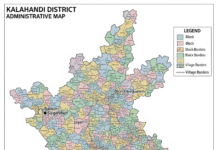






, a decades-long revolt led by Veer Surendra Sai against oppressive British rule in Odisha.)