
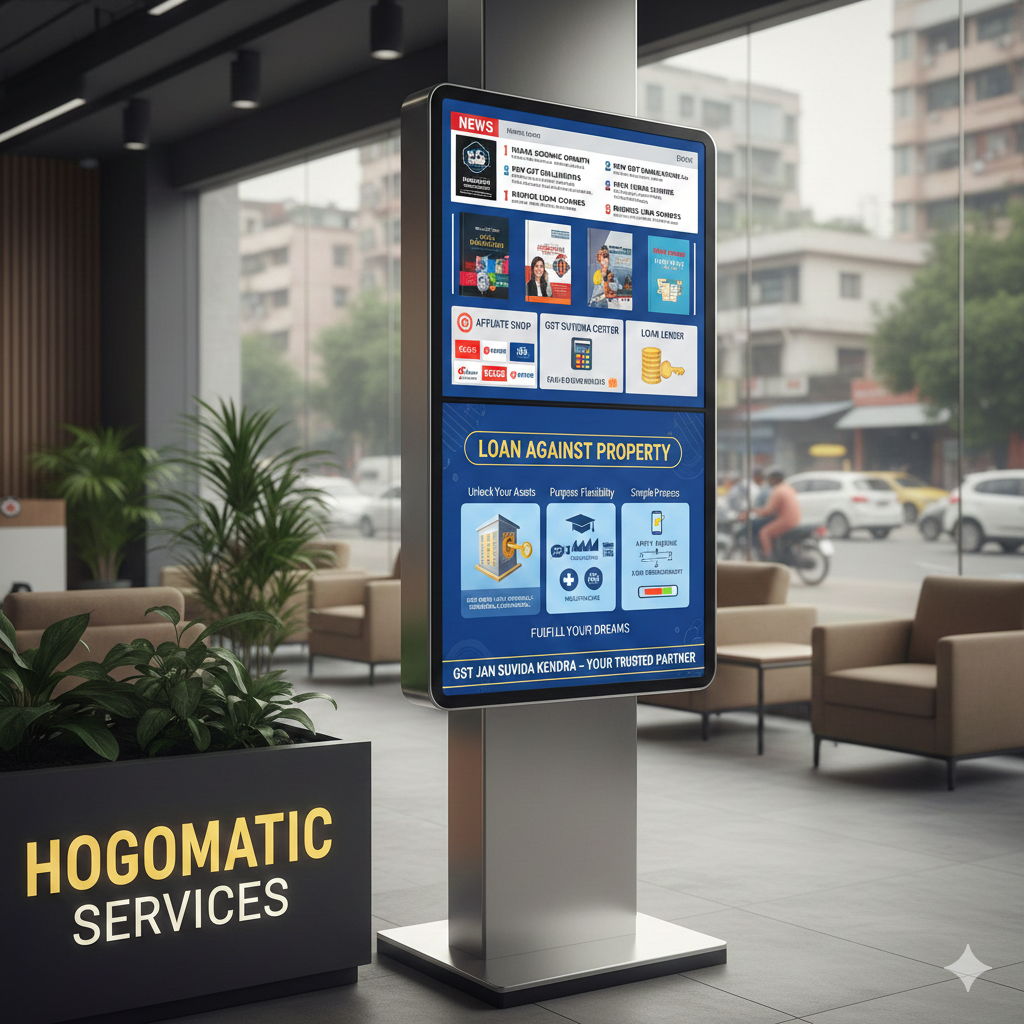
The Ultimate Guide to Loan Against Property (LAP): Unlock the Hidden Value of Your Real Estate
In the modern financial landscape, capital is the fuel for growth. Whether you are a small business owner looking to expand, a parent planning for a child’s international education, or an individual facing an unexpected medical emergency, the need for substantial funds can arise at any time.
At pcachary.in, acting as your trusted GST Suvidha Center and Financial Gateway, we understand that while your requirements are large, your resources shouldn’t be locked away. Loan Against Property (LAP) is one of the most potent financial instruments available in India today, allowing you to leverage your most stationary asset—your property—to fulfill your most dynamic dreams.
1. Understanding Loan Against Property (LAP)
A Loan Against Property is a type of secured loan where the borrower pledges their residential, commercial, or industrial property as collateral to a bank or a Non-Banking Financial Company (NBFC). Unlike a home loan, which is used specifically to purchase a new property, LAP allows you to use the funds for any legitimate purpose.
Why choose LAP over other loans?
- Lower Interest Rates: Because the loan is secured by real estate, the risk for the lender is lower, resulting in interest rates significantly lower than Personal Loans or Credit Card loans.
- Higher Loan Quantum: You can unlock up to 60-70% of the market value of your property.
- Longer Tenures: Repayment periods can stretch up to 15-20 years, making EMIs affordable.
2. Types of Properties Accepted for LAP
Through our network at the GST Suvidha Center (Branch Code: WB 093), we facilitate loans against various property types:
- Residential Property: Self-occupied houses, rented-out flats, or even vacant residential plots.
- Commercial Property: Office spaces, shops, showrooms, and warehouses.
- Industrial Property: Factory land or manufacturing units.
- Alternative Assets: In some cases, hospitals or educational institutions.
3. The Power of “Multipurpose” Funding
The beauty of a Loan Against Property lies in its flexibility. While the Indian government and GST Suvidha Centers focus on easing the burden of business owners, LAP acts as the financial bridge for:
- Business Expansion: Buying new machinery, increasing inventory, or scaling up operations.
- Debt Consolidation: Paying off high-interest short-term debts with one low-interest long-term EMI.
- Education & Weddings: Funding high-value personal milestones without depleting life savings.
- Medical Contingencies: Managing large-scale healthcare costs with ease.
4. Eligibility Criteria: Who Can Apply?
At pcachary.in, we believe in financial inclusion. Our eligibility criteria are designed to be accessible:
- Employment Status: Salaried individuals, Self-Employed Professionals (Doctors, CAs, Architects), and Self-Employed Non-Professionals (Traders, Manufacturers).
- Age: Generally between 21 and 65 years (at the time of loan maturity).
- Income Stability: Proof of steady income to ensure EMI affordability.
- Credit Score: A healthy CIBIL score (usually 700+) ensures faster approval and better rates.
- GST Compliance: For business owners, having regular GST filings (which we can assist with at our Budge Budge center) significantly strengthens the loan application.
5. Documentation: The Checklist
Navigating paperwork is often the biggest hurdle for borrowers. As a GST Jan Suvidha Kendra, we simplify this for you.
For Individuals/Salaried:
- Identity Proof (Aadhar, PAN Card).
- Address Proof (Utility bills, Passport).
- Salary slips for the last 6 months.
- Bank statements for the last 6 months.
- Original Property Documents (Title deeds, approved plans).
For Business Owners/GST Registered Entities:
- GST Returns: Essential for verifying business turnover.
- Income Tax Returns (ITR): Usually for the last 2-3 years.
- Audited Balance Sheets: To prove the financial health of the business.
- Proof of Business Existence: Shop & Establishment License or GST Registration Certificate.
6. How Your Loan Amount is Calculated (LTV Ratio)
The amount you can borrow depends on the Loan-to-Value (LTV) ratio.
Loan\ Amount = Property Market Value X LTV\%
Typically, lenders offer:
- Residential Property: 60% to 75% LTV.
- Commercial Property: 50% to 65% LTV.
- Industrial/Plots: 40% to 55% LTV.
Example: If your commercial shop in Kolkata is valued at ₹1 Crore, you could potentially secure a loan of ₹60 Lakhs to grow your business.
7. The GST Suvidha Center Advantage
Why should you process your Loan Against Property through Purna Chandra Achary (Branch WB 093)?
- The “One-Stop Shop” Model: We don’t just help with the loan. We ensure your GST filings, ITRs, and bookkeeping are up to date so that the bank sees you as a low-risk, high-credibility borrower.
- Expert Guidance: Our team of 170+ backend experts and experienced relationship managers understand the nuances of the lending market.
- End-to-End Support: From property valuation to legal verification and final disbursement, we stand by you.
- Local Expertise in Budge Budge & Kolkata: We understand the local real estate market, helping you get the best valuation for your property.
8. Step-by-Step Application Process
- Consultation: Contact us at connect@pcachary.in or visit our Budge Budge office.
- Financial Health Check: We review your GST and income documents.
- Application Submission: We help you choose the right lender from our banking partners.
- Property Valuation & Legal Check: The lender’s team inspects the property to ensure it has a “clear title.”
- Sanction & Disbursement: Once satisfied, the bank issues a sanction letter, and the funds are credited to your account.
9. Frequently Asked Questions (FAQs)
Q: Can I still use my property while it is pledged?
A: Absolutely. You retain full ownership and usage of the property. The bank only keeps the original documents as security.
Q: What if I have a low CIBIL score?
A: While a high score is preferred, as a GST Suvidha Center, we can help you organize your financial documents to present a stronger case to NBFCs who might be more flexible.
Q: Is the interest rate fixed or floating?
A: Most LAP products offer floating rates tied to the Repo Rate, but fixed options are available. We help you choose based on market trends.
10. Challenging Assumptions: Is LAP Always Better?
An Intellectual Sparing Perspective:
While LAP offers lower rates than personal loans, remember that it is secured. Failure to repay can result in the loss of your asset. At pcachary.in, we prioritize truth over agreement. We will only recommend a Loan Against Property if your cash flow can comfortably support the EMI. We test your logic: Are you using long-term debt to solve a short-term cash flow problem? If so, we might suggest alternative GST-linked credit lines instead.
Conclusion: Transform Your Property into Progress
Your property is more than just bricks and mortar; it is a reservoir of financial potential. At GST Suvidha Center (WB 093), managed by Purna Chandra Achary, we provide the technical expertise and the personalized touch needed to navigate the complexities of loans, insurance, and GST.
Don’t let your business stay behind due to a lack of capital.
Take the Next Step
Are you ready to see how much loan you can get against your property?
- Visit us: Budge Budge, Kolkata 700137.
- Call/WhatsApp: +91 9836812177
- Email: connect@pcachary.in
- Web: pcachary.in
