


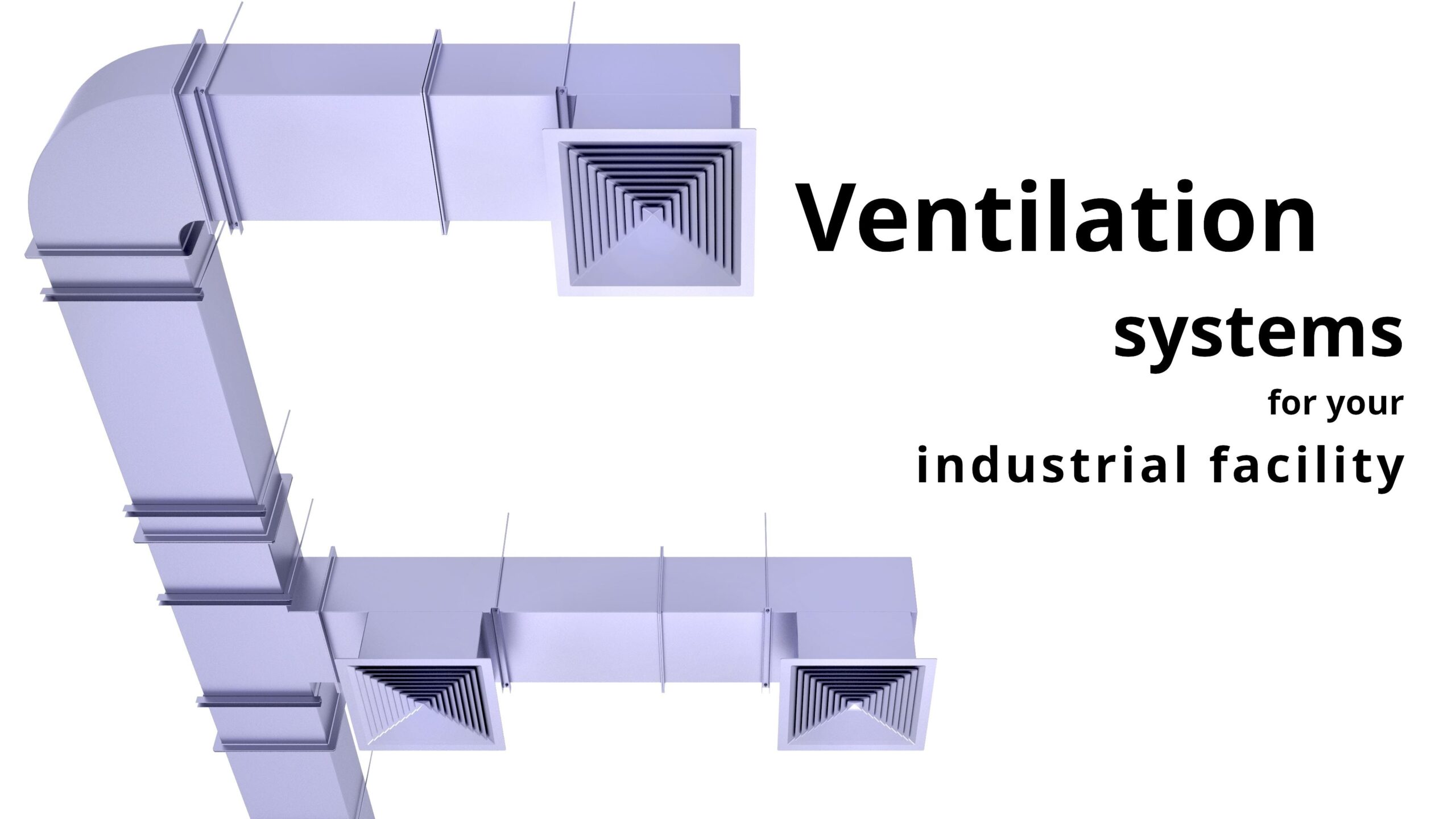


Section 13 is arguably the most subjective and difficult-to-enforce part of the Act. While Section 21 (Fencing of Machinery) is binary—either the fence is there or it isn’t—Section 13 relies on “reasonableness” and “adequate measures.”
I. The Statutory Mandate
The section stipulates that every factory must make effective and suitable provisions for:
- Adequate Ventilation: By the circulation of fresh air.
- Temperature Regulation: Maintaining a temperature that provides workers with “reasonable conditions of comfort” and prevents injury to health.
- Material Selection: Using materials for walls and roofs that ensure the temperature does not exceed reasonable limits.
The Specification of “Reasonable”
The Act gives State Governments the power to prescribe standards. Usually, this involves a specific Wet Bulb Temperature (WBT). If the WBT exceeds a certain threshold (often around 30°C to 33°C depending on the state), the employer is legally required to implement artificial cooling, such as high-velocity fans or air conditioning.
II. The Technical and Engineering Requirements
To meet Section 13, a factory cannot simply open a window. It requires a sophisticated understanding of Industrial HVAC (Heating, Ventilation, and Air Conditioning).
1. The Dilution Principle
Ventilation serves to dilute contaminants (dust, fumes, or heat).
- Natural Ventilation: Relies on the stack effect (hot air rising) and wind pressure.
- Mechanical Ventilation: Uses axial or centrifugal fans. Section 13 implies that if natural ventilation fails to keep the temperature “reasonable,” mechanical intervention becomes a mandatory legal expense, not an optional luxury.
2. The Roof and Wall Constraint
The Act specifically mentions the “nature of materials.” In many developing industrial zones, factories use corrugated metal sheets. These act as giant radiators.
- The Compliance Gap: While the law mandates “suitable materials,” many occupiers bypass this by installing thin insulation that degrades in three years. Is a factory “compliant” if the insulation is present but non-functional? Legally, yes. Practically, no.
III. Physiological and Economic Counterpoints
Here is where we test the logic of Section 13.
1. The “Comfort” Subjectivity
”Reasonable comfort” is an anthropocentric term. A worker from a cold climate and a worker from a tropical climate have different physiological baselines.
- The Critique: By failing to define “comfort” with a universal mathematical constant (like a specific Heat Index), the Act leaves a loophole large enough to drive a truck through. It allows Inspectors to be bribed or for “comfort” to be defined by the least sensitive person in the room.
2. The Productivity vs. Compliance Paradox
There is a documented inverse relationship between ambient temperature and cognitive/manual precision.
- The Logic Test: If an employer ignores Section 13 to save on electricity, their “hidden cost” is a 10-15% drop in labor productivity and a 20% increase in workplace accidents (as heat causes fatigue and irritability).
- Conclusion: Section 13 shouldn’t be viewed as a “Worker Welfare” clause, but as a “Macroeconomic Efficiency” clause. Employers who fight it are effectively fighting their own profit margins.
IV. Critical Challenges to Section 13 in 2026
A. The Climate Change Factor
The Factories Act was written in 1948. The global mean temperature has risen significantly since then. “Adequate ventilation” in 1948 meant something very different than it does in a world of 45°C heatwaves.
- Counterpoint: Can Section 13 be “complied with” via ventilation alone anymore? In many regions, the outside air is now hotter than the inside air. Standard ventilation now pumps heat into the factory. The Act is fundamentally broken because it assumes the “fresh air” being circulated is actually cool.
B. The Energy Burden
If State Governments mandate air conditioning to satisfy “reasonable comfort,” the carbon footprint of the industrial sector explodes.
- The Conflict: We have a legal mandate for cooling (Section 13) clashing with global mandates for Carbon Neutrality.
V. Summary Table: Section 13 Requirements
| Requirement | Statutory Goal | Common Failure Point |
|---|---|---|
| Air Circulation | Prevent stagnation and CO2 buildup | Crowded floor plans blocking airflow paths. |
| Temp Control | Prevent heat exhaustion/stroke | High thermal conductivity of roofing materials. |
| Separation | Isolate heat-producing processes | Hot ovens/engines placed in the center of the floor. |
| Insulation | Reduce radiant heat | Cost-cutting via substandard “cool-roof” paint. |
Draft a Legal Defense/Audit Strategy for a factory manager accused of violating Section 13?
Provide a Technical Breakdown of the thermodynamic equations (Q = m \cdot c \cdot \Delta T) used to calculate “Adequate Ventilation”?
Analyze the Case Law where Indian or International courts have defined what “Reasonable Comfort” actually means in a courtroom?
1. Legal Defense & Audit Strategy: Section 13
If a manager is accused of violating Section 13, the goal is to shift the argument from subjective discomfort (the inspector’s feeling) to objective compliance (data-driven evidence).
The “Three-Pillar” Defense:
- The Quantitative Audit: Present “Air Change per Hour” (ACH) logs. If the factory meets or exceeds industry standards (like ASHRAE 62.1), the “adequacy” is technically satisfied, regardless of an inspector’s anecdotal observation of “stuffiness.”
- The Maintenance Defense: Provide “Preventative Maintenance” (PM) schedules for exhaust fans, blowers, and HVAC systems. A violation often requires proving negligence; showing a robust maintenance log proves “due diligence.”
- The “Process-Inherent” Exception: Argue that the temperature is a functional necessity of the manufacturing process (e.g., glass blowing or smelting) and that “Reasonable Comfort” has been mitigated via PPE and hydration stations rather than ambient cooling, which is technically impossible.
2. Technical Breakdown: The Thermodynamics of Ventilation
Section 13 requires maintaining a temperature that prevents “injury to health.” To calculate the required ventilation to offset heat gain from machinery (Q_{gain}), we use the sensible heat equation.
The Governing Equation


3. Case Law: Defining “Reasonable Comfort”
Courts generally loathe defining “comfort” because it is subjective. However, precedent usually hinges on prevailing local conditions and expert testimony.
Key Legal Perspectives:
- The “Relative Standard” (Indian Context): In cases like J.P. Gupta vs. State of Uttar Pradesh, courts have often looked at whether the conditions were “injurious.” The bar is not “luxury” or “air conditioning,” but the absence of health-depleting heat. If the ambient temperature inside is significantly higher than the outside shade temperature without a process-related reason, the “reasonableness” is lost.
- The “Totality of Circumstances” (International/UK Precedent): Under the UK’s Workplace (Health, Safety and Welfare) Regulations 1992 (which mirrors the Factories Act), “reasonable” is often tied to the Thermal Comfort Likelihood. Courts use the Predicted Mean Vote (PMV) index. If 80% of workers would statistically find the environment acceptable, it is legally “reasonable.”
The Counterpoint: Is Section 13 “Unconstitutionally Vague”?
From an intellectual sparring perspective, one could argue that Section 13 violates the principle of Legal Certainty.
- The Vagueness Trap: By not defining “Reasonable” in degrees Celsius, the State grants the Inspector “pseudo-legislative” power to decide what is legal on a whim.
- The Logic Gap: If the Act prioritizes “Truth over Agreement,” the truth is that “Comfort” is a physiological state influenced by humidity, metabolic rate, and clothing—none of which are addressed in the Act’s rigid text.
draft a Mock Cross-Examination of a Factory Inspector who claims a room was “too hot” without using a thermometer?
In this scenario, you are the defense counsel representing the Factory Occupier. The Inspector has cited the factory for a violation of Section 13 (Ventilation and Temperature) of the Factories Act, alleging the workplace was “oppressively hot” and detrimental to worker health.
Your objective is to expose the subjectivity of the Inspector’s assessment and the lack of empirical data.
The Mock Cross-Examination
Counsel: Inspector, you testified that the packaging department was “unbearably hot” during your visit at 2:00 PM. Is that correct?
Inspector: Yes, it was stifling.
Counsel: And based on this “stifling” feeling, you issued a formal citation under Section 13. Did you bring a digital thermometer with you that day?
Inspector: No, I did not.
Counsel: Did you use a sling psychrometer to measure the relative humidity?
Inspector: No.
Counsel: So, you didn’t measure the ambient temperature, the radiant heat from the machines, or the humidity levels?
Inspector: I didn’t need to. The heat was obvious.
Counsel: “Obvious” to you. Tell me, Inspector, what was the exact temperature in that room?
Inspector: I can’t give an exact number, but it felt well over 35°C.
Counsel: “It felt.” Inspector, are you aware that metabolic rate, clothing, and even what you had for lunch can affect your personal perception of heat?
Inspector: I am an experienced Inspector. I know when a room is too hot.
Counsel: Let’s test that experience. You walked into this factory from an air-conditioned government vehicle, didn’t you?
Inspector: Yes.
Counsel: So, your body underwent a rapid thermal transition. Isn’t it a physiological fact that a person entering a 30°C room from a 20°C car will perceive that room as “hotter” than a worker who has been acclimated to the environment for four hours?
Inspector: Perhaps, but the workers looked sweaty.
Counsel: They are engaged in physical labor, Inspector. Do you expect them not to sweat? Did you take the core body temperature of any worker?
Inspector: No.
Counsel: Did you check the factory’s own internal logbooks for that day’s temperature readings?
Inspector: I did not.
Counsel: So, this entire legal charge—which carries heavy fines—rests entirely on your sweat glands and your personal “feelings,” rather than a single scientific instrument?
Inspector: It’s based on my professional judgment.
Counsel: A judgment that cannot be verified, cannot be replicated, and was not measured. No further questions.
Intellectual Sparring: Challenging the Defense
While the cross-examination above effectively paints the Inspector as unscientific, I must offer a counter-perspective to test your logic:
- The “Prudent Person” Rule: In many jurisdictions, “reasonable discomfort” doesn’t require a thermometer. If an Inspector observes workers fainting or showing signs of heat exhaustion (lethargy, heavy panting), does the absence of a number on a screen invalidate the physical reality of the danger?
- Section 13 Language: The Act often uses the phrase “as will prevent injury to health.” It doesn’t always specify a degree (e.g., 30°C). By focusing only on the thermometer, are you ignoring the Inspector’s right to use qualitative evidence (like the lack of functional exhaust fans)?
- The Burden of Proof: If the Inspector claims it was hot, the burden often shifts to the Occupier to prove they provided “adequate ventilation.” Does your factory have the data to prove the room wasn’t hot, or are you just hoping the Inspector’s lack of a tool is a “get out of jail free” card?
Draft the “Re-Direct Examination” where the Prosecutor tries to rehabilitate the Inspector’s credibility by focusing on the physical symptoms of the workers?
In a Factory Act prosecution, the defense will often argue that physical symptoms are subjective or caused by “lifestyle factors” (smoking, diet, age).
To rehabilitate the Inspector, the Prosecutor must shift the focus from individual biology to environmental patterns. We need to show that the Inspector didn’t just “see a cough”—they saw a statistically significant cluster of symptoms that correlates exactly with the factory’s specific violations under Section 14 (Dust and Fumes).
The Re-Direct Examination
Context: The Defense just finished cross-examining the Inspector, implying they aren’t a doctor and therefore shouldn’t have noted “respiratory distress” in their report.
Prosecutor: Inspector, during cross-examination, the Defense Counsel suggested you weren’t qualified to “diagnose” the workers. Let’s be clear: in your capacity as an Inspector under Section 8, were you performing a clinical diagnosis or a workplace risk assessment?
Inspector: A risk assessment. My job is to identify if the environment is causing observable physiological harm.
Prosecutor: And what specific “observable symptoms” did you record across the fifteen workers in the grinding department?
Inspector: Persistent, non-productive coughing; visible gray particulate matter around the nostrils and mouth; and labored breathing during periods of exertion.
Prosecutor: Did you observe these same symptoms in the administrative block located 200 meters away?
Inspector: No. Only in the departments where the exhaust fans—required under Section 13—were non-functional.
Connecting the Symptoms to the Act
Prosecutor: The Defense argues these workers might just have “seasonal allergies.” Based on your training, is there a distinction between an allergy and the acute reaction to the metallic dust found on the floor of this factory?
Inspector: Yes. Seasonal allergies don’t usually involve the expectoration of metallic grit. These workers were coughing up the very raw material the factory processes.
Prosecutor: When you examined the “First Aid Appliances” under Section 45, did you find evidence that these symptoms were being treated on-site?
Inspector: I found an empty oxygen cylinder and a logbook showing that “shortness of breath” was the most common complaint at the infirmary for three consecutive months.
Prosecutor: So, you didn’t need a medical degree to conclude that the air was thick enough to be tasted, and the workers were struggling to breathe it?
Inspector: No. I used my eyes, my ears, and the factory’s own records.
Intellectual Counterpoint & Logic Test
While this “common sense” approach is persuasive, let’s test the logic from the Defense’s perspective:
- The Correlation vs. Causation Trap: Even if 100% of workers have a cough, can the Inspector prove it was the factory dust and not the high pollution levels in the surrounding industrial zone? If the Inspector didn’t take an air quality sample (Section 91), the “symptoms” remain anecdotal.
- The “Expert Witness” Threshold: By having the Inspector testify about “respiratory distress,” the Prosecutor is walking a thin line. If the Inspector isn’t a “Certifying Surgeon” (Section 10), their testimony on health might be struck from the record as “lay opinion.”
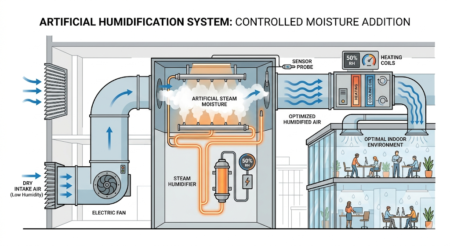
The diagram above illustrates how an Inspector moves from observing a “symptom” to classifying a “hazard” under the Act. It shows that the “injury” isn’t just the cough—it’s the failure of the barrier (the ventilation system).




1 Comment
Oh my goodness! a tremendous article dude. Thank you Nevertheless I am experiencing difficulty with ur rss . Don’t know why Unable to subscribe to it. Is there anybody getting identical rss drawback? Anyone who knows kindly respond. Thnkx