


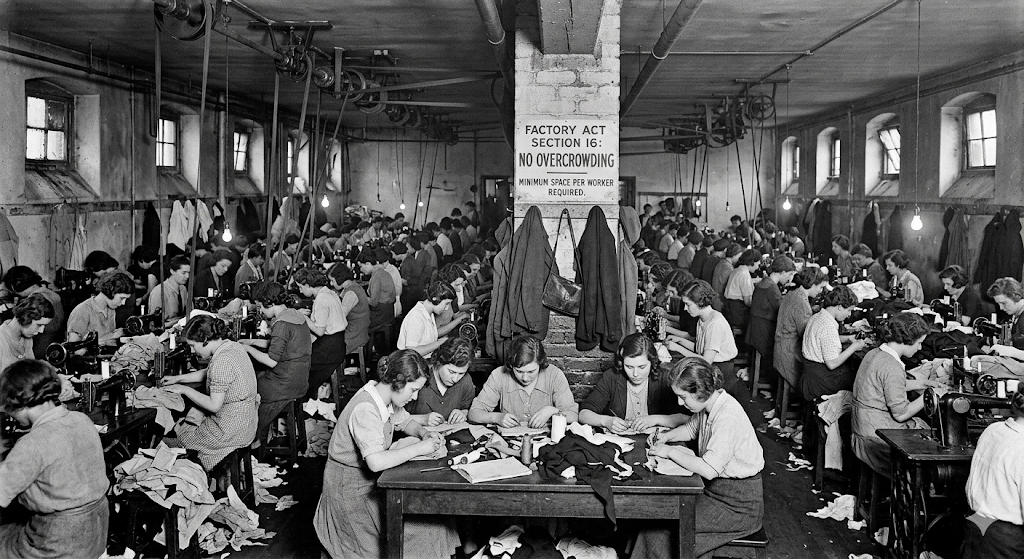


In the realm of industrial safety and labor welfare, physical space is more than just a logistical requirement; it is a fundamental right of the worker. Section 16 of the Factories Act serves as a critical regulatory pillar designed to prevent the physical and psychological hazards associated with overcrowding. This guide provides an in-depth analysis of Section 16, its technical requirements, and its implications for modern industrial management.
1. The Legislative Intent of Section 16
The primary objective of Section 16 is to ensure that no room in a factory is so crowded as to be injurious to the health of the workers employed therein. Overcrowding is not merely a matter of discomfort; it is a significant health hazard that facilitates the spread of respiratory diseases, increases ambient temperature, hampers emergency egress, and elevates stress levels.
By mandating specific cubic space requirements, the Act transitions from a vague “sufficient space” standard to a measurable, enforceable legal obligation.
2. Technical Standards for Space Allocation
Section 16 provides two distinct sets of standards based on when a factory was established. This “grandfather clause” ensures that older structures remain compliant while setting higher bars for modern industrial architecture.
2.1 The “Old Factory” Standard (Pre-1948)
For factories already in existence at the commencement of the Act, the law requires a minimum of 9.9 cubic meters (approximately 350 cubic feet) of space for every worker employed in a room.
2.2 The “Modern Factory” Standard (Post-1948)
For any factory built or started after the commencement of the Act, the requirement is significantly increased to 14.2 cubic meters (approximately 500 cubic feet) per worker. This reflects an evolving understanding of occupational health and the need for greater air circulation in increasingly mechanized environments.
2.3 The Height Limitation Rule
A crucial technicality in Section 16 is the “Height Cap.” When calculating the cubic space of a room, any height exceeding 4.2 meters (approximately 14 feet) from the floor level must be excluded from the calculation.
- The Logic: Air space that is too high above the workers does not contribute effectively to the immediate ventilation or cooling of the breathing zone. This prevents employers from claiming compliance simply by having extremely high ceilings in a cramped floor area.
3. Legal Obligations and Compliance Documentation
Compliance with Section 16 is not a one-time event but a continuous operational requirement.
3.1 The Notice of Capacity
The Chief Inspector of Factories may require the occupier to post a notice in every workroom. This notice must clearly state:
- The maximum number of workers who may be employed in that specific room.
- The dimensions (length, breadth, and height) used to calculate that capacity.
3.2 Exemptions and Discretionary Powers
The Chief Inspector has the authority to exempt a particular room from these specific standards if they are satisfied that the nature of the work or the efficiency of the ventilation system renders the strict cubic space requirement unnecessary for the health of the workers. However, such exemptions are usually conditional and subject to periodic review.
4. The Risks of Non-Compliance: Why Space Matters
Failure to adhere to Section 16 creates a cascade of risks that can cripple a factory’s productivity and legal standing.
4.1 Respiratory Health and Air Quality
Overcrowded spaces lead to a rapid buildup of carbon dioxide and a decrease in oxygen. In industries involving dust, fumes, or chemical vapors, overcrowding traps these pollutants in the immediate breathing zone of the workers, leading to chronic obstructive pulmonary diseases (COPD) and other occupational illnesses.
4.2 Thermal Comfort
Every human body acts as a heat source. In a confined space with too many people, the ambient temperature rises quickly. This leads to heat exhaustion, reduced cognitive function, and an increased likelihood of workplace accidents due to fatigue.
4.3 Emergency Response and Egress
In the event of a fire, chemical leak, or structural failure, overcrowding is a death sentence. Narrowed pathways and high personnel density lead to “crush zones” and prevent swift evacuation. Section 16 works in tandem with fire safety regulations to ensure that the “human load” of a building matches its exit capacity.
5. Integration with Modern Management Systems
While Section 16 is a legal mandate, it should be viewed by management as a blueprint for efficiency.
5.1 Lean Manufacturing and Ergonomics
Modern “Lean” principles often focus on minimizing movement, but this should never come at the cost of the 14.2 cubic meter rule. Proper space allocation allows for better ergonomic setup of workstations, reducing musculoskeletal disorders (MSDs) and improving individual output.
5.2 The Role of HR and Safety Officers
Safety officers must conduct regular “Space Audits.” When new machinery is installed or production shifts are increased, the volume occupied by the machinery must be subtracted from the total room volume to ensure the remaining “free air space” still meets the per-worker requirement.
6. Conclusion: Space as a Safety Asset
Section 16 of the Factories Act is one of the most straightforward yet impactful sections of labor law. It recognizes that the environment in which a worker operates is as important as the tools they use. For the employer, compliance ensures a healthier, more alert workforce and immunity from heavy penalties. For the worker, it ensures the “breathing room” necessary to perform their duties with dignity and safety.
In an era of increasing industrial density, the 14.2 cubic meter rule remains a timeless standard for human-centric manufacturing.





1 Comment
I like the efforts you have put in this, thankyou for all the great blog posts.