Comprehensive Guide to Startup India and the Ecosystem of Entrepreneurship: A Strategic Overview
The landscape of Indian entrepreneurship has undergone a seismic shift over the last decade. What was once a journey defined by bureaucratic hurdles and capital scarcity has transformed into a vibrant, tech-driven ecosystem that is currently the third-largest startup hub in the world. Central to this transformation is the Startup India initiative, a flagship program by the Government of India designed to build a strong ecosystem that is conducive to the growth of startup businesses, driving sustainable economic growth, and generating large-scale employment opportunities.
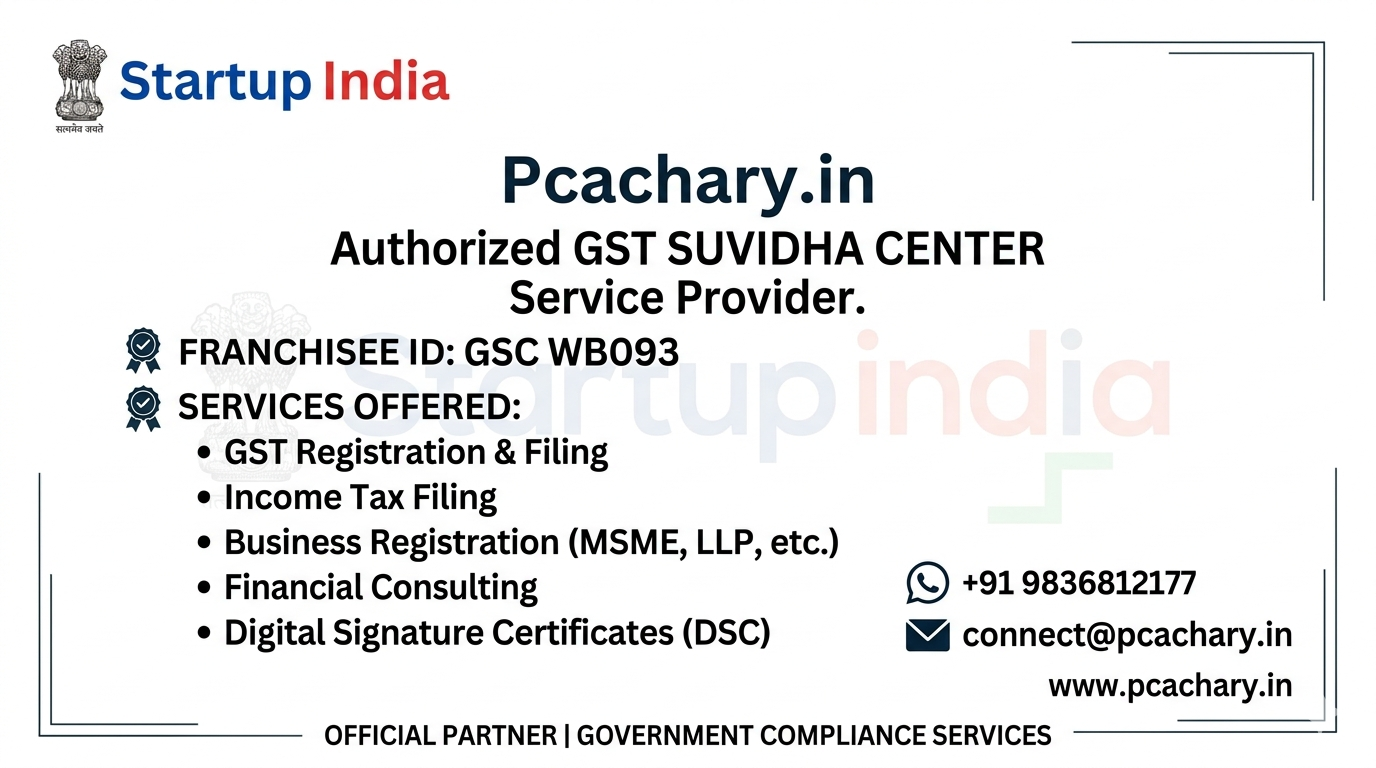
For an entrepreneur or a service provider like a GST Suvidha Center, understanding the nuances of this initiative is not just beneficial—it is essential for fostering compliance and growth. Operating with a professional edge, such as through Franchisee ID GSC WB093, allows for the bridging of the gap between complex government mandates and the grassroots innovator.
The Genesis and Vision of Startup India
Launched in January 2016, Startup India was envisioned as a catalyst for change. The primary objective was to move away from the “license raj” mentality toward a “facilitation” model. The initiative is built on three main pillars:
- Simplification and Handholding: Reducing the regulatory burden and making it easier for startups to start, operate, and even exit if necessary.
- Funding Support and Incentives: Providing financial assistance through funds-of-funds and offering tax exemptions to ensure capital remains within the business during its formative years.
- Industry-Academia Partnership and Incubation: Building incubators, organizing grand challenges, and fostering a culture of innovation starting from the university level.
For those navigating these pillars, professional consultancy is often required. You can find detailed support and service integration at Pcachary.in, or reach out directly via email at connect@pcachary.in or through WhatsApp at +91 9836812177.
Defining a “Startup” under the Initiative
Not every new business is a “Startup” in the eyes of the Department for Promotion of Industry and Internal Trade (DPIIT). To avail of the benefits, an entity must meet specific criteria:
- Age of Entity: The date of its incorporation/registration must not exceed ten years.
- Type of Entity: It must be incorporated as a Private Limited Company, a Registered Partnership Firm, or a Limited Liability Partnership (LLP).
- Annual Turnover: The turnover for any of the financial years since incorporation/registration must not have exceeded 100 Crore INR.
- Innovation and Scalability: The entity should be working toward innovation, development, or improvement of products, processes, or services, or have a scalable business model with high potential for employment generation or wealth creation.
Importantly, an entity formed by splitting up or reconstructing an existing business is not considered a “startup.”
The Role of GST Suvidha Centers in the Startup Journey
The introduction of the Goods and Services Tax (GST) was a landmark reform, but for a budding entrepreneur, the compliance requirements—ranging from registration to monthly filing—can be daunting. This is where a GST Suvidha Center becomes a critical partner.
Operating under Franchisee ID GSC WB093, these centers act as authorized intermediaries. They provide a streamlined interface for startups to manage their tax obligations without needing to become tax experts themselves. This allows the founders to focus on their core product while the GSC handles:
- GST Registration: Ensuring the business has the correct legal standing from day one.
- Returns Filing: Maintaining a clean compliance record to attract investors.
- E-Way Bill Generation: Facilitating the smooth movement of goods across state borders.
- Audit Support: Helping businesses stay prepared for regulatory scrutiny.
Professional assistance in these areas is accessible through Pcachary.in.
Key Benefits of DPIIT Recognition
When a startup registers through the Startup India portal and receives DPIIT recognition, it unlocks a suite of benefits designed to accelerate growth.
1. Intellectual Property (IP) Protections
Startups often live and die by their intellectual property. The government has introduced the Start-ups Intellectual Property Protection (SIPP) scheme. Recognized startups can avail:
- Fast-tracking of Patent Applications: Allowing them to realize the value of their innovation sooner.
- Rebate on Filing Fees: A significant 80% rebate on patent filing and a 50% rebate on trademark filing.
- Panel of Facilitators: Access to legal experts who help in filing, with the government bearing the facilitation costs.
2. Tax Exemptions
To help startups tide over the initial years of negative or low cash flow, several tax benefits are offered:
- Income Tax Exemption (Section 80-IAC): Eligible startups can avail a tax holiday for three consecutive years out of their first ten years since incorporation.
- Exemption from Angel Tax (Section 56(2)(viib)): This is perhaps the most discussed benefit, exempting startups from tax on share premium received above the fair market value, provided certain conditions are met.
3. Easier Public Procurement Norms
Small startups often find it impossible to compete with established giants for government tenders due to requirements for “prior turnover” or “prior experience.” Startup India has relaxed these norms for recognized startups, provided they meet the technical specifications of the tender.
4. Self-Certification
To reduce the “Inspector Raj,” startups are allowed to self-certify compliance for six labor laws and three environmental laws. No inspections are conducted for these laws for a period of three to five years unless a credible complaint of violation is filed.
Navigating the Registration Process
The path to becoming a recognized startup involves a digital-first approach.
- Incorporation: First, the business must be registered as a Pvt Ltd, LLP, or Partnership.
- Registration on the Portal: Visit the Startup India website and create a profile.
- DPIIT Recognition: Apply for recognition by providing details about the innovation, scalability, and employment potential. Documentation like a write-up on the nature of the business and a pitch deck is often required.
During this process, ensuring that your legal and tax foundation is solid is paramount. Leveraging the services of a GST Suvidha Center (GSC WB093) can prevent common errors that lead to application rejection. For guidance on these steps, connect via WhatsApp at +91 9836812177 or check the resources at Pcachary.in.
Funding the Dream: Schemes and Incentives
Capital is the lifeblood of any venture. Startup India addresses this through various financial instruments:
Startup India Seed Fund Scheme (SISFS)
This scheme provides financial assistance to startups for proof of concept, prototype development, product trials, market entry, and commercialization. It is particularly useful for early-stage startups that have not yet reached the stage where venture capitalists are interested.
Fund of Funds for Startups (FFS)
The government has committed a corpus to a Fund of Funds managed by SIDBI. This fund does not invest directly in startups but contributes to the capital of SEBI-registered Alternative Investment Funds (AIFs), which then invest in high-potential startups.
Credit Guarantee Scheme for Startups (CGSS)
To encourage collateral-free lending, this scheme provides credit guarantees to Scheduled Commercial Banks, NBFCs, and AIFs. This makes it easier for startups to secure debt financing without pledging personal assets.
Challenges in the Ecosystem
While the support is immense, the road to a successful startup is fraught with challenges:
- Market Fit: Many startups fail because they build products that the market doesn’t actually want.
- Regulatory Complexity: Despite simplification efforts, the intersection of GST, MCA, and Labor laws can still be complex. This is why having a dedicated service partner like Pcachary.in is vital.
- Talent Acquisition: Attracting top talent away from high-paying corporate jobs requires more than just a good salary; it requires a compelling vision and often ESOPs (Employee Stock Option Plans).
Conclusion: Empowering the Next Wave of Innovators
The Startup India initiative is more than just a set of policies; it is a movement to democratize entrepreneurship. It seeks to ensure that a young innovator in a small town has the same opportunities as a tech graduate in a metro city.
By utilizing professional services—whether it is for GST compliance through Franchisee ID GSC WB093 or for broader business consultancy—startups can navigate the complexities of the modern business world with confidence.
If you are ready to take the leap into the world of startups, or if you are an existing business looking to optimize your compliance and leverage government schemes, the resources are available.
- Website: Pcachary.in
- Email: connect@pcachary.in
- WhatsApp: +91 9836812177
The future of the Indian economy is being written by the startups of today. Ensure your business is part of that story by staying compliant, staying innovative, and staying connected with the right partners.



Reviews
There are no reviews yet.