Bargarh rewards the traveller who looks beyond a checklist. In western Odisha, its broad cultivated plains, low forested hills, sacred places and performance traditions create a landscape where agriculture, craft and memory remain closely connected. The district is often introduced through Dhanu Yatra, the great annual open-air enactment of Krishna lore, but its deeper character also lies in the loom villages, the Gandhamardan foothills, the Jeera river country and the old routes linking the Mahanadi basin with the interior.
This is not a district of one monumental site. It is a place to travel slowly: to understand why a handloom motif has the discipline of a field pattern, why a hill shrine gathers both pilgrims and walkers, and why a town can become a stage without ceasing to be a working town. Bargarh’s best experiences are therefore less about spectacle alone than about attention, timing and respect for living religious and ecological spaces.
District Overview & Geography
Bargarh occupies Odisha’s western borderland, adjoining Chhattisgarh along its western side and lying west of Sambalpur. Administratively, it was created from the former Sambalpur district in 1993. Its headquarters town, Bargarh, stands by the Jeera or Jira river, in a region shaped by farming, trade and the long cultural connections of western Odisha. The official district account places the area within the wider Mahanadi drainage and identifies the Mahanadi, Jeera, Danta, Ong and Jhaun among its important rivers and streams. Government of Odisha’s district geography note
The terrain moves between productive plains and older uplands. Irrigated paddy country is central to the district’s identity, while rain-fed areas and the hill tracts ask for a different rhythm of cultivation. The Gandhamardan hills near Paikmal are the most resonant upland landscape for visitors, while the Barapahar range and the country around Debrigarh bring forest, reservoir edge and historical associations into the picture. Deciduous forest is part of this geography; it is not a scenic backdrop detached from the lives and livelihoods around it.
Seasons matter greatly in planning. The district administration describes a hot, dry summer, a monsoon broadly running from June to October, and a cooler winter. District education department geography note For most visitors, the post-monsoon months through winter are the most comfortable period for town walks, temple visits and road journeys. The October-to-March window is specifically recommended by Odisha Tourism for Nrusinghanath. Odisha Tourism Summer travel is possible, but should be approached with realistic expectations about heat, hydration and mid-day outdoor activity. During the rains, waterfalls and vegetation can be striking, yet slippery paths, swollen streams and changing road conditions require caution.
Bargarh’s geography also explains its culture. Paddy harvest cycles are reflected in seasonal gatherings; riverine plains made room for settlement and markets; hills gave religious imagination a physical setting; and the textile economy took shape in communities whose skills travelled across the historical region. The district’s handloom heritage is particularly visible in Sambalpuri tie-dye traditions. The local government notes the importance of weaving across Bargarh’s blocks and records the historical presence of Bhulia Meher weavers in the area. Bargarh handicraft profile
For visitors, this is a useful corrective to the idea that western Odisha is a single, uniform plateau. Bargarh is a varied district: agricultural at its centre, hilly at key edges, river-connected and culturally porous. A route here is best understood as a sequence of landscapes rather than merely a drive between attractions.
Mythological & Historical Significance
Bargarh’s written historical record and its devotional traditions should be read together, but not confused. The district history page identifies “Baghar Kota” in an eleventh-century inscription as an earlier name associated with the place. It says Bargarh was probably named in the time of Balaram Dev, the Chauhan ruler of Sambalpur, who is associated in the account with making it a headquarters and constructing a fort. The word “probably” matters: it signals an informed local historical attribution rather than an absolute conclusion. Government of Odisha history page
The Chauhan political world remains an important frame for understanding this part of western Odisha. Bargarh belonged to the historical orbit of Sambalpur and the former Borasambar estate, whose headquarters later shifted to Padampur. Ruins, local place names and temple landscapes are meaningful traces, but visitors should avoid turning every mound or broken wall into a definitive royal monument without archaeological evidence. At Baseikela Gada in Bheden block, the district tourism page associates fortification remains on the Jeera bank with Raja Manohar Singh, a local zamindar and associate of Veer Surendra Sai. Baseikela Gada It is a site where the material remnant and the freedom-era regional memory meet.
The name of Veer Surendra Sai carries particular force across western Odisha. The district account links him to resistance against British rule and to Debrigarh and the Barapahar range; it also recalls Barabakhra’s twelve caves as a meeting place in that period. These associations make the landscape historically evocative, but they do not turn every forest track into a self-guided heritage trail. Forest access must always follow current rules and authorised routes.
Bargarh has a smaller but significant Buddhist dimension. The district’s account says historians identify a belt of monasteries and sculptures extending from Ganiapali towards the Paikmal–Nrusinghanath area, and connects this interpretation with Xuanzang’s reference to Parimalagiri. District history This is valuable context, not a final resolution of ancient geography. At Ganiapali, visitors encounter a place in which archaeological interest survives through local landscape and memory, rather than through a museum-like, fully interpreted complex. Approach it with patience and do not disturb sculpture fragments, shrines or village spaces.
Mythology is most powerfully present in Bargarh through performance. Dhanu Yatra stages episodes from the Krishna cycle: Bargarh is theatrically imagined as Mathura, while Ambapali across the Jeera is understood as Gopapura. The myth is a sacred dramatic framework, not evidence that the events of Krishna’s life occurred here as documented history. The district culture page traces the festival’s post-Independence beginning to 1947–48, after the paddy harvest, and describes a town-and-village performance geography shaped by devotional participation. Bargarh culture and heritage
The same distinction is useful at Nrusinghanath. The shrine on the northern slopes of Gandhamardan is dedicated to Nrusingha, the Vishnu incarnation. Odisha Tourism refers to Ramayana-linked legends, medicinal flora, forest setting and a waterfall, all of which explain the place’s devotional pull. Nrusinghanath Temple Legends should be heard as living religious tradition, not presented as dated historical fact.
Bargarh’s modern cultural history is equally important. The district honours poet Gangadhar Meher, remembered as Swabhaba Kabi, and freedom fighter Parbati Giri, who participated in the Quit India movement while still very young. It also acknowledges the contribution of textile practitioners including Kruthartha Acharya and Kunjabihari Meher to the recognition of Sambalpuri design. District history These figures help explain why literature, public life and cloth are not peripheral cultural topics here; they are part of how the district narrates itself.
Tourist Destinations & Hidden Gems
Nrusinghanath is Bargarh’s essential sacred-and-natural destination. At Paikmal, on the northern face of the Gandhamardan hills, the shrine is set within a landscape where pilgrimage, water and forest are inseparable. Odisha Tourism describes it as a Vishnu shrine with a perennial waterfall nearby, surrounded by dense forest and medicinal plant traditions. Odisha Tourism Its appeal is not simply visual. Arrive with time for the temple precinct, listen to the devotional atmosphere, and treat surrounding trails as sensitive terrain rather than informal adventure infrastructure. Harishankar Temple lies on the opposite side of Gandhamardan in Balangir district; it makes geographical sense in a longer regional circuit but is not a Bargarh attraction.
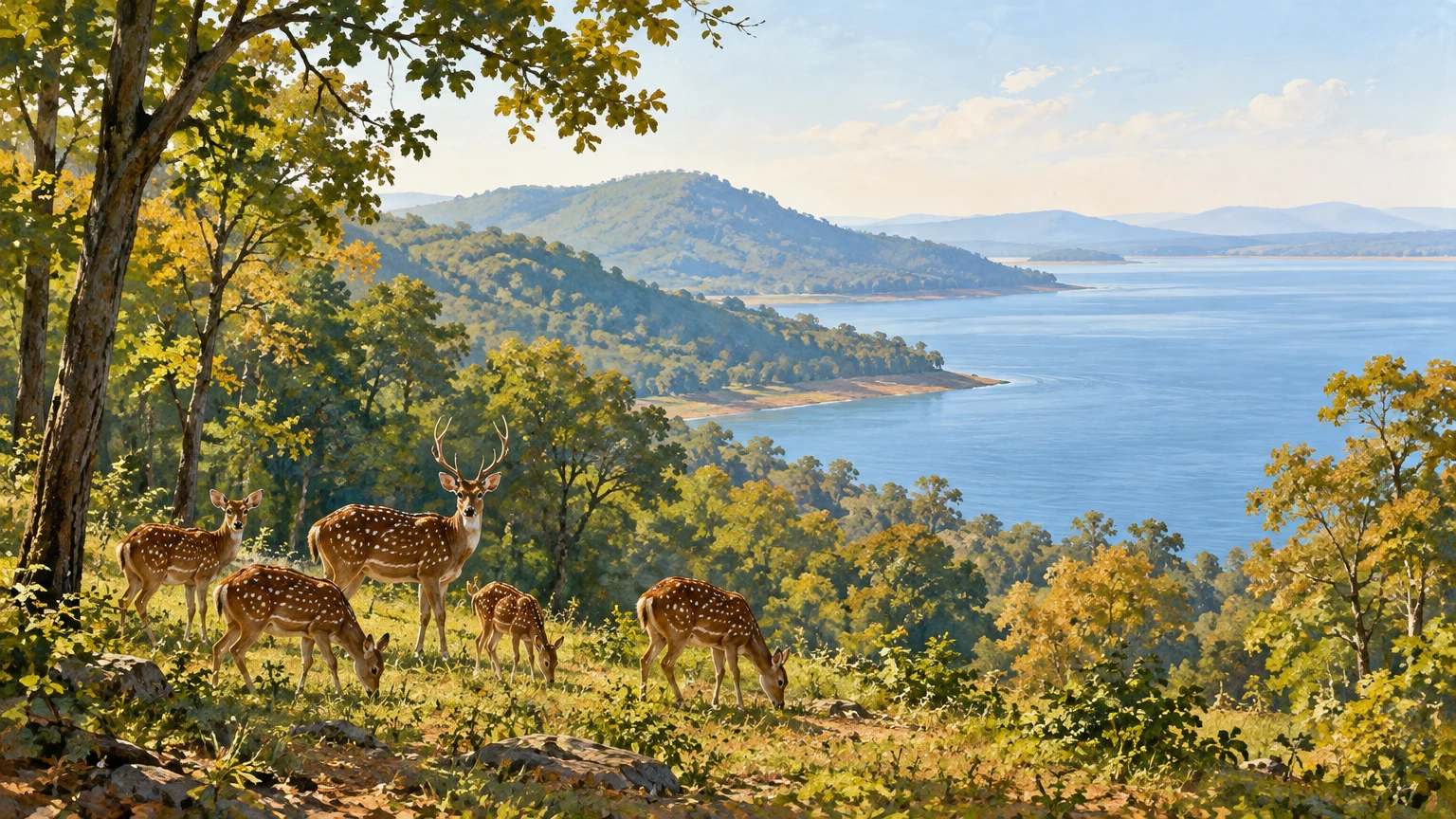
Debrigarh Wildlife Sanctuary offers another kind of western Odisha landscape: dry deciduous forest, open grassland and the immense water body created by the Hirakud reservoir. Debrigarh belongs in a wider Bargarh–Sambalpur travel circuit: Odisha Tourism names both places in its destination information. Visitors should distinguish the sanctuary location from their arrival city and the wider reservoir landscape. Odisha Tourism lists gaur, deer, leopard, wild boar and birds among the fauna visitors may encounter. Debrigarh Wildlife Sanctuary Wildlife is never guaranteed, and a responsible safari is not a chase for a photograph. Book only through authorised channels, obey guide instructions, remain quiet, keep distance from animals and avoid littering or carrying single-use plastic into protected areas.
Debrigarh is also an excellent place to understand the difference between access and entitlement. The reservoir edge can look inviting, but visitors should not assume that swimming, unsupervised boating or wandering off designated routes is safe or permitted. Weather, water level, wildlife movement and management rules change. The point of visiting is not to conquer a landscape but to enter it lightly.
Bara Bakhra is associated with the Surendra Sai memory of resistance and is often included in the Debrigarh heritage imagination. It deserves a visit only as part of an authorised, locally guided route where available. The caves’ historical associations make them culturally important; they do not justify climbing, graffiti, removal of stones or unsafe exploration.
Ganiapali in Gaisilat block is a quieter historical stop. The official tourism listing places it about 75 kilometres from the district headquarters and identifies it with Buddhist heritage. Tourist places, Bargarh Its value lies in the layered possibility of early religious history rather than a polished tourist presentation. Ask locally before photographing worshippers or private homes, and do not touch or move antiquities.
Baseikela Gada, on the Bheden–Barpali road, offers a more legible encounter with local resistance memory. The district page describes fortification remains beside the Jeera and preserves a story of the “Ghitghiti Pathar,” said to have sounded an alarm when British soldiers approached. That story belongs to local oral tradition; it should be shared as such rather than treated as independently verified military technology. Baseikela Gada
Papanga Mountain and Budharaja is another place where hill, shrine and local memory converge. Near Papanga village in Bheden block, the official page records Budharaja worship at the foot of the hill, a forest garden and links to Surendra Sai’s rebellion. It also says Banabihar is observed on Chaitra Purnima. Papanga Mountain and Budharaja No future calendar date should be assumed from that description: festival arrangements and local observance need confirmation close to travel.
Other district-listed stops include Arjunda’s Patharasini shrine on the Mahanadi bank, Giri Gobardhan at Dekulba, Sankrida’s Bindhyabasini and the group of six Astasambhu shrines. These work best for travellers interested in local sacred geography rather than rapid sightseeing. The Astasambhu circuit, for instance, rewards an understanding of Shaiva worship, village ritual and seasonal gathering more than a hurried photographic stop.
Bargarh town itself is an attraction when approached through culture. Dhanu Yatra’s transformation of streets and markets into performance space is its most famous example, but the handloom economy is equally revealing. Buy Sambalpuri ikat or tie-dye textiles from artisans, cooperatives or reliable local sellers, ask about weave and fibre, and seek consent before photographing a loom or a person at work. A textile is not merely a souvenir; it represents design knowledge, patient labour and a commercial livelihood.
Huma, often promoted in wider western Odisha itineraries, is in Sambalpur district, not Bargarh. Similarly, visitors should not blur nearby destinations into the district simply because they share roads, rivers or tourism circuits. Clear boundaries make a journey more respectful and more accurate.
Recent News & Tourism Developments
The most concrete recent tourism update concerns Debrigarh. On 4 October 2026, The New Indian Express reported the inauguration of ten Dhodrokusum homestays managed by tribal women, along with visitor facilities including seasonal camping tents, log-house dormitory accommodation, a shop, ecotourism cell, theatre and tea shop. The report linked the initiative to community livelihoods and said camping bookings had begun for the October-to-May season. The New Indian Express, 4 October 2026
This is encouraging, but travellers should not treat a news report as a permanent inventory of rooms, prices or operating dates. Availability, seasonal closure, booking conditions and entry protocols need checking directly with authorised eco-tourism channels before departure. The important development is the stated model: local participation in tourism linked to conservation, rather than tourism detached from the people living around the sanctuary.
Debrigarh’s official EcoTour Odisha material also stresses managed entry and pre-booking for activities. EcoTour Odisha: Debrigarh Conditions shown online can change, so visitors should rely on the booking process and on-site instructions rather than screenshots, old blogs or assumed safari schedules.
For Bargarh’s cultural calendar, OMMCOM News on 13 October 2026 and a corroborating Odisha TV report say the next Dhanu Yatra is scheduled for 12–22 January 2027. Odisha TV OMMCOM News, 13 October 2026 Visitors should still reconfirm with organisers closer to the event. Older online listings give a conflicting 28 December 2026–7 January 2027 period, while one report published on 14 October gives a different end date. Incredible India listing The two matching committee-based reports are the stronger current guide than the conflicting listings, but festival schedules are operational information and can change.
The planned 2027 festival matters beyond crowd spectacle. It creates a rare civic theatre in which residents, performers, public spaces, commerce and religious narrative interact. Visitors should expect altered traffic patterns, busy accommodation and dense pedestrian movement; book early where possible, follow local crowd-management advice, and avoid treating performers or worshippers as props.
No separately verified, district-specific announcement of a completed major tourism infrastructure project beyond the Debrigarh facilities was found in the evidence reviewed for this edition. Older proposals or broad state tourism claims should not be presented as completed Bargarh works.
Traveler Essentials
Getting there: Bargarh is reached most straightforwardly by road from Sambalpur and other western Odisha towns. Bargarh Road is the rail access commonly referenced for the district, while Jharsuguda’s Veer Surendra Sai Airport is the airport named by Odisha Tourism for reaching Nrusinghanath. Nrusinghanath travel information Train, flight and bus timings change, so verify current services on official operator platforms before finalising a route. For a multi-stop itinerary, a hired vehicle or local driver can make sense, particularly for the Paikmal and Debrigarh sides of the district.
Suggested pacing: Give Bargarh at least two full days. One can centre on town, handloom and nearby heritage stops; another can be devoted to either Nrusinghanath or an authorised Debrigarh visit. Add a third day if combining temple, forest and Ganiapali routes. Avoid trying to cover both distant edges of the district in a single rushed day.
A useful three-day plan starts with Bargarh town and a pre-arranged handloom visit, leaving the afternoon flexible for a nearby village or riverbank shrine. This is an itinerary suggestion, not a packaged tour with guaranteed access. A weaving household may be working to an order, observing a festival or simply unable to receive visitors. Ask a seller, cooperative or local guide to arrange an introduction rather than walking into a workshop as if it were a public museum. Allow time to discuss cotton, silk, care and pricing without making a purchase obligatory.
On the second day, choose the Paikmal side for Nrusinghanath. Travel via the Padampur approach where appropriate to your starting point, allow a substantial part of the day for road travel, and keep the temple visit separate from any longer hill walk. A nearby waterfall does not mean that every path is suitable for children, older visitors or someone with limited mobility. Ask about steps, recent rain and the exact walking distance before leaving the vehicle. Harishankar is a separate Balangir-side destination; the temples’ spiritual relationship is not a promise of an easy through-hike or a short road transfer.
For a third day, build an authorised Debrigarh stay or excursion around the confirmed check-in and safari arrangements. Sambalpur can be a practical regional staging point, but the arrival station, accommodation reception and sanctuary entry are not the same place. EcoTour Odisha identifies entry through Zeropoint and describes the nature camp as five kilometres inside on a motorable forest road. Official destination information Confirm the meeting point and permit requirements before setting out. Leave spare time for the final approach rather than assuming a city taxi can replace an authorised safari vehicle.
If a shorter visit is unavoidable, choose one theme well: textiles and civic theatre, the Gandhamardan shrine landscape, or forest and reservoir ecology. Combining every theme in a compressed day can mean spending more time negotiating roads than experiencing a place. Ganiapali and Papanga are worthwhile deliberate detours, not compulsory boxes to tick. For festival travel, leave the daytime route flexible so that crowd controls and evening performances, rather than an overfull sightseeing list, determine the pace.
When to go: October to March is generally the easiest period for comfort, and Odisha Tourism specifically identifies October–March as the best period for Nrusinghanath. Monsoon travel is greener but more weather-dependent. In peak summer, start early, rest through the hottest hours and carry water. Dhanu Yatra requires a different form of preparation: plan around crowds rather than expecting a quiet cultural break.
Forest and water safety: Use authorised safaris and guides in Debrigarh. Do not feed wildlife, play music, fly drones, leave marked routes, collect plants or attempt to approach animals. Do not assume reservoir or waterfall areas are safe for swimming or boating. Follow current forest and local instructions even where social media suggests otherwise.
Food and markets: Eat with curiosity but without claims of exclusivity. Western Odisha’s everyday table may include pakhala, dalma, leafy saag and seasonal pitha, alongside rice-based meals shaped by local harvests. These are regional foods shared across Odisha in many forms, not inventions belonging to Bargarh alone. Ask small eateries what is fresh and locally prepared; choose clean, busy places and carry a refillable water bottle.
Temple etiquette: Dress modestly, remove footwear where required, respect queues and ask before photography. A shrine is a place of worship before it is a destination. At village sites, seek permission before photographing people, rituals, homes, looms or religious objects.
Shopping responsibly: Bargarh’s Sambalpuri textiles make meaningful purchases when buyers value the maker as well as the motif. Ask whether a piece is handwoven, how it should be cared for, and who made it. Bargaining that disregards skilled labour is not a cultural experience. Prefer a considered purchase over a pile of anonymous souvenirs.
Bargarh is at its strongest when visited with humility. Its theatre is public, but not superficial; its forests are welcoming, but not a playground; its myths are alive, but not archival proof; and its cloth carries histories that cannot be reduced to a pattern. Travel here slowly, verify practical arrangements, and leave room for the district to speak in its own cadence.
Publishing Metadata & Tagging
- Group: Odisha Tourism
- Section/Category: Society And Culture
- Destination: https://pcachary.in
- District: Bargarh
- Cycle: 1
- Tags: Odisha Tourism; Bargarh; Society And Culture
Sources and evidence check
Evidence checked 20 October 2026. Undated official destination pages describe the place; they do not guarantee current availability, transport timetables or prices.
- Government of Odisha, Bargarh district history — district history, Buddhist associations, cultural figures and historical attributions. Undated; accessed 20 October 2026. Parimalagiri identification is attributed to the district account; the page’s loose description of Debrigarh as a tiger sanctuary is not used as evidence of a notified tiger reserve.
- Government of Odisha, district education department geography note — terrain, rivers and seasonal climate. Undated; accessed 20 October 2026. Internally inconsistent boundary and administrative wording, exact area and forest-percentage figures are not reproduced.
- Government of Odisha, Bargarh tourist places — official attraction list and district locations. Undated; accessed 20 October 2026.
- Government of Odisha, Bargarh culture and heritage — Dhanu Yatra background, post-Independence origin and performance geography. Undated; accessed 20 October 2026.
- Government of Odisha, Bargarh handicraft — handloom and weaving-community context. Undated; accessed 20 October 2026. Old loom counts are not treated as current statistics.
- Government of Odisha, Baseikela Gada — fortification remains, Manohar Singh association and Ghitghiti Pathar tradition. Undated; accessed 20 October 2026. The sounding-stone story is presented as local tradition, not independently verified military technology.
- Government of Odisha, Papanga Mountain and Budharaja — site description and Chaitra Purnima observance. Undated; accessed 20 October 2026. No exact future Banabihar date is asserted.
- Odisha Tourism, Nrusinghanath Temple — Paikmal location, Gandhamardan setting, season and transport approaches. Undated; accessed 20 October 2026. Ramayana links are devotional legends; Harishankar is on the Balangir side, outside Bargarh.
- Odisha Tourism, Debrigarh Wildlife Sanctuary — habitat, fauna, regional approaches and authorised activities. Undated; accessed 20 October 2026. Wildlife sightings are not guaranteed.
- EcoTour Odisha, Debrigarh Wildlife Sanctuary — managed eco-tourism access, Zeropoint entry and nature-camp approach. Undated; accessed 20 October 2026. Packages, fees and room inventory require a fresh booking check; the page’s older homestay inventory is not substituted for the dated inauguration report.
- The New Indian Express, “New homestays, visitor facilities inaugurated at Debrigarh wildlife sanctuary” — 4 October 2026; accessed 20 October 2026. Reports inaugurated ten Dhodrokusum homestays, twenty camping tents, two log houses and visitor facilities, with seasonal camping October–May. Reported inauguration does not guarantee bookable inventory or unchanged operating arrangements.
- Odisha TV, Dhanu Yatra 2027 dates announcement — accessed 20 October 2026; date not visible in retrieved page excerpt. Explicitly corroborates 12–22 January 2027 after a committee meeting.
- OMMCOM News, Bargarh Dhanu Jatra dates — 13 October 2026; accessed 20 October 2026. Reports the Collector’s committee announcement for 12–22 January.
- Incredible India, Dhanu Jatra — undated listing, accessed 20 October 2026, displays conflicting 28 December 2026–7 January 2027 dates. Prameya News, Kansa’s reign to return — 14 October 2026 search excerpt gives 12–24 January 2027. These discrepancies are disclosed; the two matching committee reports support 12–22 January, with reconfirmation from organisers before travel. Disputed edition numbering is omitted.
Featured-image credit
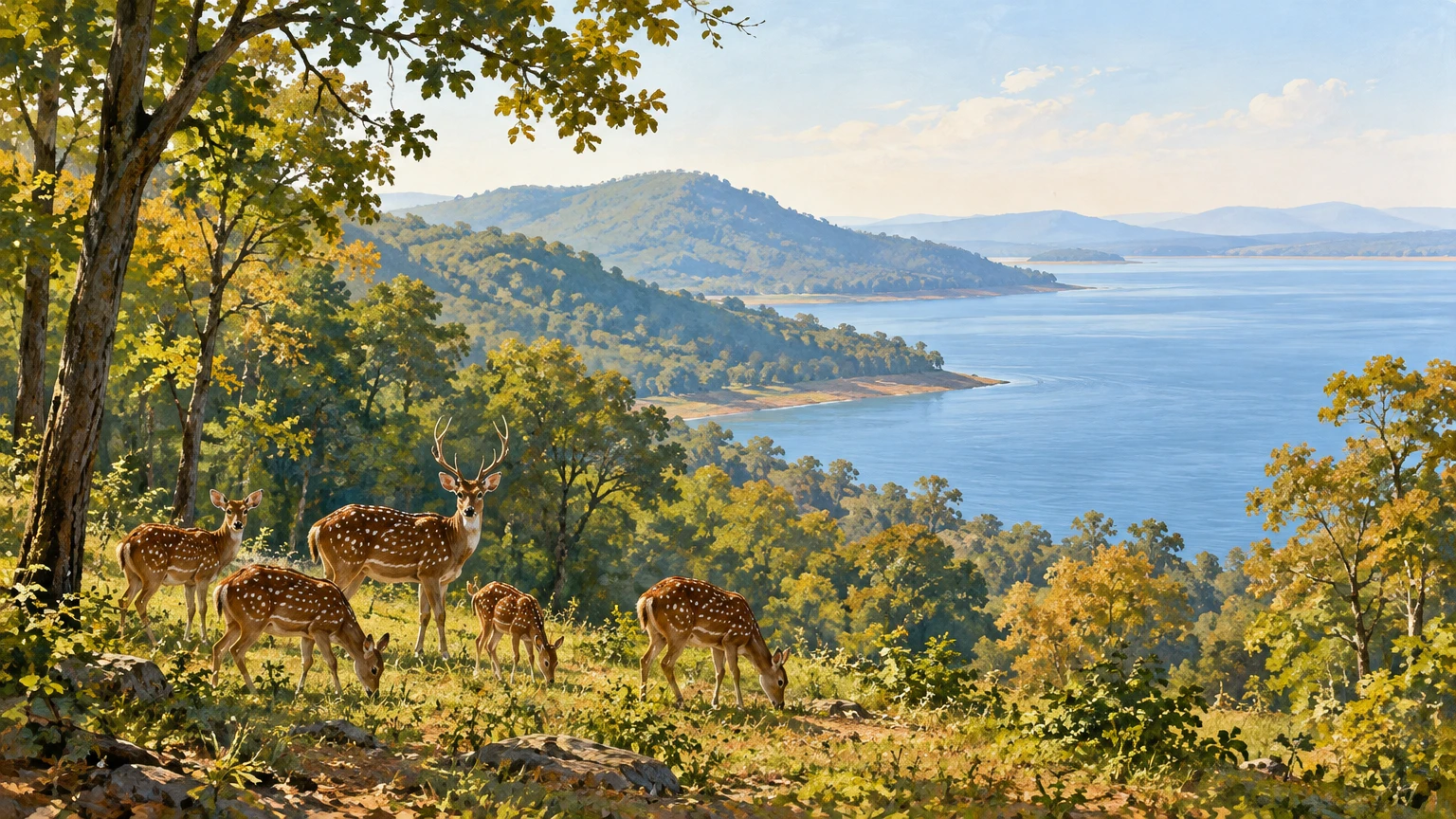
Original AI-generated editorial illustration created for this article: Debrigarh’s forest and a Hirakud-reservoir-inspired landscape with chital. This is an illustration, not a documentary photograph or a guarantee of wildlife sightings. No third-party photograph is being republished. Original illustration
Disclaimer
This content is a collection of ancient history,books and various articles and collection of library and news and other post ; all details may not be the same. Readers are requested to verify the information themselves. Readers are not allowed to take any disciplinary action; content is only for educational purposes. If readers do not agree about the contents, they may send a personal comment to my personal email ID: achary.purna@gmail.com