District Overview & Geography
Bhadrak rewards a traveller who looks beyond the highway and the railway platform. In this part of northern coastal Odisha, rivers shape the journey as much as roads: the Salandi runs through the district’s story, the Baitarani carries religious associations and practical importance, and the lower waterways lead towards Chandbali and the tidal coast. A visit can move from the worship of Maa Bhadrakali to the quiet concentration of a Sun temple, from the remembered sacrifices at Eram to the working river landscape near Dhamra. The attraction is not one spectacular viewpoint but the relationship between cultivation, faith, waterways and collective memory.
The district administration’s profile records that Bhadrak became a separate district on 1 April 1993, having previously formed part of undivided Balasore. It gives an area of approximately 2,505 square kilometres. Balasore lies to the north, Jajpur and the Baitarani to the south, Keonjhar to the west, and the Bay of Bengal and neighbouring Kendrapara towards the coastal side. This is a compact district on a state map, but a temple circuit, a memorial visit and a boat excursion should not be compressed into an unrealistic single day. River crossings and local road conditions matter more than straight-line distances.
A plain made by water
Bhadrak’s official history and geographical account describes a level alluvial tract sloping gradually eastwards towards the Bay of Bengal. This is an important correction to generic travel descriptions that advertise waterfalls and mountain safaris in every district. Bhadrak’s distinctive landscape is primarily a riverine and coastal plain, with agricultural fields, settlements, drainage channels and estuarine environments. The Baitarani and Salandi are the best-known rivers in the visitor’s mental map, but the district account also names the Kanshbansha, Mantei, Genguti and other waterways. Their significance is lived through irrigation, seasonal water levels, transport and the siting of villages and shrines.
Paddy cultivation is central to this landscape. The district profile identifies agriculture as the main source of income and highlights fishing livelihoods in coastal parts of Dhamra, Chudamani and Chandbali. From a visitor’s perspective, that means the green view beside a road is also someone’s workplace. Paths through standing crops, fishing landing areas and boat-repair spaces are not automatically public attractions. Watching from an established route, asking before entering and paying for a locally guided experience are more useful contributions than treating every working landscape as an unrestricted photo location. Seasonal changes in the fields also make repeat visits visually different without requiring a newly built attraction.
Climate, greenery and the coastal edge
The administration describes Bhadrak as generally hot and humid, with May the hottest month and December the coldest; it places the usual monsoon arrival in June. It also says that rainfall from June to October makes up at least three-quarters of the district’s annual total. These are broad climatic patterns, not a forecast for a particular travel date. October can bring a pleasant change of season, but a late spell of heavy rain can still alter rural access. Winter generally offers the most comfortable combination for heritage visits and longer days outside, while summer calls for early starts, shade and a less ambitious afternoon programme.
Do not picture Bhadrak as one continuous forest reserve. Its visitor experience is better understood through cultivated plains, village vegetation and the mangrove-linked estuarine landscape reached from the Chandbali side. A numerical district forest-cover percentage is not given here because a current, comparable figure was not established in the sources checked. The nearby Bhitarkanika ecosystem supports mangroves, birds and estuarine crocodiles, but its protected landscape is in neighbouring Kendrapara. Bhadrak is a useful gateway, not a reason to move another district’s national park across an administrative boundary. That distinction helps travellers choose the correct entry point, accommodation and permissions.
Mythological & Historical Significance
The name and the goddess
The most familiar explanation of Bhadrak’s name connects it with Maa Bhadrakali. The district profile explicitly presents that association as a legend, while its longer history page also discusses a proposed connection with Balabhadra Kshetra and the area’s agricultural character. These accounts are part of the district’s cultural imagination; they should not be flattened into a single archaeologically proven etymology. A useful travel narrative can respect a community’s sacred explanation while acknowledging that the origin of a place-name may remain debated. Bhadrak becomes more interesting, not less, when its different layers of meaning are allowed to remain visible.
At Aharapada, the Maa Bhadrakali shrine gives that naming tradition a living focus. The official description identifies a black-granite deity seated in lotus posture on a lion. It also records differing religious interpretations of the image, including an association with Durga because of the lion. Those are devotional interpretations rather than a competition that visitors need to resolve. The appropriate approach is to observe local practice, ask a knowledgeable custodian when a question arises and avoid presenting a casual visual impression as a scholarly conclusion about the goddess’s identity or the date of the shrine.
Aradi’s sacred discovery story
At Aradi, the Baba Akhandalamani temple stands by the Baitarani and is dedicated to Shiva. The district’s account links the beginnings of worship to a black stone found underground and to a ruler’s dream, naming Niladri Samara Singha Mohapatra in that tradition. It describes the origin in terms of approximately 350 years, but that undated phrasing should not be converted into a precise foundation year. The discovery and dream belong to the shrine’s legendary narrative. They explain why the site matters to devotees; they are not independent evidence that a supernatural event occurred.
Akhandalamani’s continuing importance is easier to understand through ritual life than through an exact chronology alone. The official description identifies Mahashivaratri as a major gathering and notes the arrival of devotees carrying water during Sravana. A quiet visit and a festival visit are therefore very different experiences of the same place. The first offers time to notice the relationship between temple and river; the second places the traveller inside a moving religious community. Neither should be reduced to an exotic spectacle. Give worshippers priority, follow the queue and treat photography as something to ask about rather than an automatic entitlement.
Sun worship and a documented architectural layer
Palia offers another strand of religious history. The administration’s Sri Biranchinarayan account associates the temple with Surya worship and describes four carved Sun images on the sides of a tapering stone. Its interpretation dates the architecture to the thirteenth century and records renovation and reconstruction in the early twentieth century. That is a more carefully bounded claim than calling the whole present structure untouched medieval work. A traveller can look for the relationship between the worshipped image, the building and later intervention without assuming that every visible component belongs to one original construction campaign.
Eram and the freedom movement
Eram brings the story into a different historical register. The district’s memorial account records police firing on a gathering during the Quit India movement on 28 September 1942. It describes 28 immediate deaths and a later death among the injured, and names Pari Bewa among the martyrs. This is a history of colonial violence and local political participation, not temple folklore. The popular name Raktatirtha conveys the place’s significance in public memory. Its emotional force does not require sensational superlatives or competitive rankings against other massacres; the people commemorated deserve attention in their own right.
The connection between these places is not a single uninterrupted story. Bhadrakali and Aradi express sacred traditions, Palia opens a window on Sun worship and changing architecture, and Eram preserves a modern political memory. Reading them together makes a district journey richer than a checklist of monuments. It also calls for different habits of interpretation: listen respectfully to belief, distinguish architectural dating from legend, and read memorial names slowly. Where a source mixes devotional language and historical assertions, keep those categories separate rather than borrowing the strongest-sounding sentence and presenting it as settled fact.
Tourist Destinations & Hidden Gems
Maa Bhadrakali: begin close to town
Maa Bhadrakali is a practical first stop for visitors based in Bhadrak town. The administration places the shrine approximately five kilometres to the south-west, at Aharapada, with an approach through Santhia and Utarabahini. The published visiting periods are 6:30 am to 1 pm and 3 pm to 9:30 pm, but these undated hours should be reconfirmed before departure, especially during festivals or exceptional local arrangements. An early visit also leaves time to return for breakfast or continue towards another site without spending the hottest part of the day rushing between distant corners of the district.
The experience need not depend on a dramatic photograph. Notice the movement from town into the shrine’s surroundings, the way visitors make offerings and the care given to an active place of worship. Dress respectfully, remove footwear where required and ask about access before entering an inner area. A temple that welcomes visitors may still restrict photography or particular spaces. Travellers with limited mobility should confirm the actual approach, steps and resting options with a local host; a place’s presence on a tourism website is not a guarantee of step-free access or specialised visitor facilities.
Aradi and the Baitarani
Aradi deserves unhurried time rather than being treated as a brief roadside stop. Its setting on the Baitarani is inseparable from the shrine’s appeal. The district page gives a road distance of about 42 kilometres from Bhadrak town, although distances in other travel descriptions vary with the starting point and route. Use a current route estimate for the journey you actually intend to make. The same official page mentions buses from Bhadrak, but does not establish a live timetable. Confirm the return journey before choosing public transport, particularly if worship or a festival might keep you there into the evening.
A longer stop makes it possible to appreciate the temple as a working religious institution. Allow time for queues, a meal and any permitted river-side viewing instead of assuming that a navigation estimate represents the whole visit. Water levels, embankments and the availability of a safe place to stand are local matters. Do not enter the river or board an informal crossing simply because someone else does so. When festival crowds are substantial, travelling with a local driver or guide can help with practical orientation, but no guide should be treated as able to waive safety restrictions or temple rules.
Palia: a quieter architectural conversation
The Biranchinarayan temple at Palia is a rewarding smaller stop for visitors interested in religious art. The district page places it about 15 kilometres south of Bhadrak on the Chandbali route. Its four-sided Sun imagery gives a specific subject to look at and discuss, rather than relying on vague claims that the site is ancient. Read the architectural description before arriving, then ask permission before examining or photographing details closely. Small living shrines often offer fewer explanatory panels than major monuments, so a prepared visitor gains more from the same short visit without expecting the place to function as a museum.
Palia is best described as a less prominent heritage stop, not a secret discovery. The phrase hidden gem should never imply that a resident community or a public shrine has remained unknown until a travel writer arrives. Its appeal lies in a slower scale of encounter: a focused architectural subject, a village setting and a manageable addition to an appropriate route. Avoid pressing too many sites into the same day merely because they appear close on a map. A quiet conversation, when welcomed, can be more valuable than several hurried photographs followed by an uncertain drive after dark.
Eram: make space for remembrance
The administration places Eram roughly 16 kilometres from Basudebpur and about 70 kilometres from Bhadrak town. These are planning distances, not guaranteed travel times. Because this is a memorial landscape, the visit deserves a different rhythm from a market excursion or a leisure river cruise. Read the historical account first, then allow time for the memorial and the names associated with it. Children can be introduced to the wider Quit India movement through the local story, with an explanation that the people commemorated came from nearby communities rather than from an abstract list in a national textbook.
The route also illustrates why district travel should be organised in sensible clusters. Eram lies on a different excursion from a relaxed Bhadrakali-and-Palia visit, and combining everything with a long boat trip risks leaving little time at any one place. A two-day heritage plan can give Eram its own half-day or longer, depending on the starting point. Keep voices and photography appropriate to a site of loss. Buy refreshments locally when available, carry back waste and avoid climbing memorial features for a better picture. Respect is part of the experience, not an optional rule attached afterwards.
Chandbali, Dhamra and the mangrove gateway
Chandbali changes the scale of a Bhadrak journey from roads and courtyards to waterways. The district identifies it as an entry point towards Bhitarkanika, listing boat and jetty facilities and accommodation options. Its page contains older tariff and permit references, including a 2016 notification, so those figures should not be treated as current quotations. Ask the relevant operator or forest authority for today’s permitted route, opening status, total charge, boarding location and return arrangements. A town’s role as a gateway does not mean that every advertised boat can lawfully take every route on any date.
Bhitarkanika itself belongs to the neighbouring Kendrapara landscape, as the Kendrapara administration confirms. Its mangroves and crocodile habitat make a cross-district excursion worthwhile when access is open and organised properly. Stay in the boat where instructed, wear a suitable life jacket, keep hands away from the water and never approach or feed wildlife. Birdwatching is best approached as patient observation rather than a guaranteed species list. Seasonal restrictions, tide, weather and wildlife-management decisions can change a planned outing, so allow flexibility instead of attaching a non-refundable onward commitment immediately after the expected return.
Dhamra adds another coastal perspective, with working maritime activity and the Maa Dhamarai tradition listed among the district’s attractions. The district tourism index labels the goddess’s sister narrative as folklore; it should be heard in that spirit. Do not confuse a shrine visit with permission to enter operational port areas, and do not assume that every coast-side stretch is a managed swimming beach. Bhadrak’s quieter rewards include the river landscape, Palia and the thoughtful combination of shrine and memorial visits. There is no need to invent a waterfall, a guaranteed turtle encounter or a remote wildlife safari to make that itinerary compelling.
Recent News & Tourism Developments
October 2026 investment proposals: promising, not completed
A dated development matters only if its status is clear. Reporting on 4 October 2026, The New Indian Express described tourism investment proposals announced around the Odisha Travel Bazaar. It specifically put hotel, resort and ecotourism project plans for Bhadrak at approximately ₹220 crore. That is a relevant sign of investor interest in the district, but the article does not establish that those proposed properties have been built, opened or made available for booking. Travellers should continue to judge accommodation by an actual property’s operating status and current terms, not by the size of an investment announcement.
The same report discusses statewide initiatives, including tourism policy changes and proposed visitor-support measures. Those are context for Bhadrak, not proof that a lifeguard, tourist-police unit or destination manager is already present at a particular local stop. A useful distinction is between policy ambition, approved investment, construction and an operating service. They are different stages. This article does not name new Bhadrak hotels or promise improved facilities on the strength of the announcement alone. The immediate travel implication is modest: the district is attracting attention, while practical arrangements still need to be checked with the people providing them.
Railway capacity approved in August
A separate, primary-source update comes from the Press Information Bureau release of 19 August 2026. It records Cabinet approval for four railway multitracking projects, including a 173-kilometre Kharagpur–Bhadrak (Ranital) fourth line and a 75-kilometre Bhadrak–Haridaspur fourth line. The release places the overall group of projects on a completion horizon up to 2030–31. These are approved capacity projects, not newly available passenger services. They should not be used to promise a shorter train journey, a new departure or fewer delays for someone travelling this week.
Festivals: distinguish the calendar from the local programme
The district profile lists Durga Puja, Kali Puja, Jagar or Shivaratri, Panchuka Purnima, Ratha Yatra and Holi among important observances. Aradi’s temple page additionally identifies Sravana water offerings. Those references establish the recurring religious calendar, not the dates, traffic plan or detailed programme of a particular upcoming celebration. No dated upcoming local festival programme was established in the material checked for this edition, so no speculative event date is printed here. Visitors choosing a festival trip should confirm the temple’s or organiser’s current notice before buying transport around a presumed procession, fair or special opening.
The district’s What’s New page also lists procurement material for Bhadrayanee-2026. A tender or pre-bid meeting notice is evidence of administrative preparation, not proof of an upcoming public event on a known date. That distinction is especially important when older and newer notices share a page. For practical planning, ask the district tourism office or a local host about the current programme and compare it with an organiser’s dated announcement. An ordinary non-festival visit remains worthwhile; there is no need to build an itinerary around an event whose exact operating dates have not been established.
Traveler Essentials
Choose a base and a realistic route
For a first heritage visit, Bhadrak town is a straightforward base because it connects the rail and highway network with the district’s inland routes. Bhadrak railway station lies on the east-coast corridor; use the current railway booking system to choose a service rather than assuming that every passing long-distance train stops there. By road, NH 16 links the town with the broader Kolkata–Bhubaneswar–Chennai axis. Bhubaneswar is the practical airport gateway named by the district tourism pages. Arrange the onward road transfer or a suitable rail connection separately, allowing time for the distance between an airport arrival and a rural temple visit.
Avoid treating the district pages’ airport distances as an exact navigation service. The individual attraction pages use different endpoints and sometimes give figures that do not fit neatly together. The useful facts are the gateway and route pattern: fly to Bhubaneswar, reach Bhadrak by an appropriate road or rail connection, then take local transport to the selected cluster. Palia is listed around 15 kilometres from town, Aradi around 42 kilometres and Eram around 70 kilometres; Chandbali is listed around 52 kilometres by road from Bhadrak. Recheck the chosen route and leave room for local traffic, stops and daylight.
A suggested two-day heritage outline begins with Maa Bhadrakali and Palia on the first day, using the remaining time for a relaxed town meal rather than a hurried cross-district transfer. The second day can focus on Aradi or Eram, according to whether sacred river heritage or freedom-movement history is the stronger interest. Treat a Chandbali-based Bhitarkanika excursion as an additional, separately arranged day rather than a guaranteed spare-hour activity. This is a proposed structure, not a fixed tour product; the order can change with accommodation, confirmed transport, temple observances and the current weather.
Season, meals and thoughtful preparation
For general sightseeing, November through February is a sensible starting preference because it avoids the peak summer heat and much of the main monsoon. October and March can also work, with attention to actual conditions. Keep morning time for outdoor travel and leave a midday rest where possible. Carry drinking water, sun protection and rain cover appropriate to the forecast. Check official weather and local access advice before a coastal or boat day; do not interpret a calm view from the riverbank as evidence that an entire tidal route is safe to operate.
Food offers an accessible introduction to local culture. The district’s culture page specifically names palua ladu and chhena mudki among Bhadrak’s sweets, making them more meaningful local choices than a generic list of dishes from across India. Ask a reputable sweet shop about freshness, ingredients and suitable storage for the journey. Rice-based meals reflect the agrarian setting, while coastal livelihoods make fish an understandable part of the wider food landscape. Vegetarian travellers can ask for a freshly prepared option rather than assuming that every kitchen follows the same ingredients or preparation practices. No particular shop, price or opening time is endorsed here.
Finally, travel in a way that leaves the district easier to enjoy after your visit. Ask before photographing people, pay agreed guide and transport charges fairly, and use locally run services when their safety and terms suit the trip. Carry waste back from riverside stops, avoid disturbing birds and keep clear of unstable banks. Bhadrak’s value lies in places that continue to serve their communities: temples remain places of worship, Eram remains a place of remembrance, and the river remains a workplace and a living environment. A good itinerary recognises those purposes instead of trying to turn every encounter into an attraction.
Publishing Metadata & Tagging
- Group: Odisha Tourism
- Section/Category: Society And Culture
- Destination: https://pcachary.in
- District: Bhadrak
- Edition: 2026-10-22
- Cycle: 1
- Tags: Odisha Tourism; Bhadrak; Society And Culture
Sources & checks
Sources and evidence check
Evidence checked 21 October 2026. Official destination pages are undated unless otherwise stated. They establish place descriptions, not live transport schedules, prices or guaranteed opening hours.
- Government of Odisha, Bhadrak district profile — formation, broad geography, agricultural and fishing livelihoods, climate and recurring festivals. Approximate 2,505-square-kilometre area retained; conflicting hectare conversion and population totals are not reproduced as current statistics.
- Government of Odisha, Bhadrak district history — alluvial topography, rivers and competing place-name accounts. Devotional etymologies are labelled traditions; uncertain dynastic and travel assertions are not reproduced as settled chronology.
- Government of Odisha, Maa Bhadrakali — Aharapada location, deity description, published visiting periods and NH 16/rail approaches. Visiting hours need fresh confirmation.
- Government of Odisha, Baba Akhandalamani — Baitarani setting, discovery/dream legend, festivals and approximate 42 km road approach. The undated approximately 350-year tradition is not converted into a precise foundation year.
- Government of Odisha, Sri Biranchinarayan — Palia location, four-sided Sun imagery, attributed thirteenth-century architectural date and early-twentieth-century reconstruction.
- Government of Odisha, Eram (Raktatirtha) — 28 September 1942 firing, 28 immediate deaths and a later death, Pari Bewa and approximate access distances. Unsupported comparative rankings and exclusivity claims are omitted.
- Government of Odisha, Bhadrak tourist places — district-listed attractions and Maa Dhamarai folklore.
- Government of Odisha, Bhadrak culture and heritage — palua ladu, chhena mudki and named heritage centres.
- Government of Odisha, entry point to Bhitarakanika — Chandbali gateway, river/boat context and approximate 52 km Bhadrak road approach. The page’s older tariffs and 2016 permit reference are not current quotations. Its conflation of sanctuary/national-park area is not repeated.
- Government of Odisha, Kendrapara district profile — confirms Bhitarkanika National Park is a Kendrapara destination, not inside Bhadrak.
- The New Indian Express, tourism investment proposals — 4 October 2026; reports approximately ₹220 crore Bhadrak hospitality/ecotourism proposals, not completed accommodation or guaranteed local deployment of statewide measures.
- Press Information Bureau, Cabinet rail-project approval — 19 August 2026; 173 km Kharagpur–Bhadrak (Ranital) and 75 km Bhadrak–Haridaspur fourth-line approvals; overall completion horizon up to 2030–31, not operating new services.
- Bhadrak district, What’s New — lists Bhadrayanee-2026 procurement/pre-bid notices, but the retrieved listing establishes no forthcoming public festival date. No exact future event date is asserted.
Featured-image credit
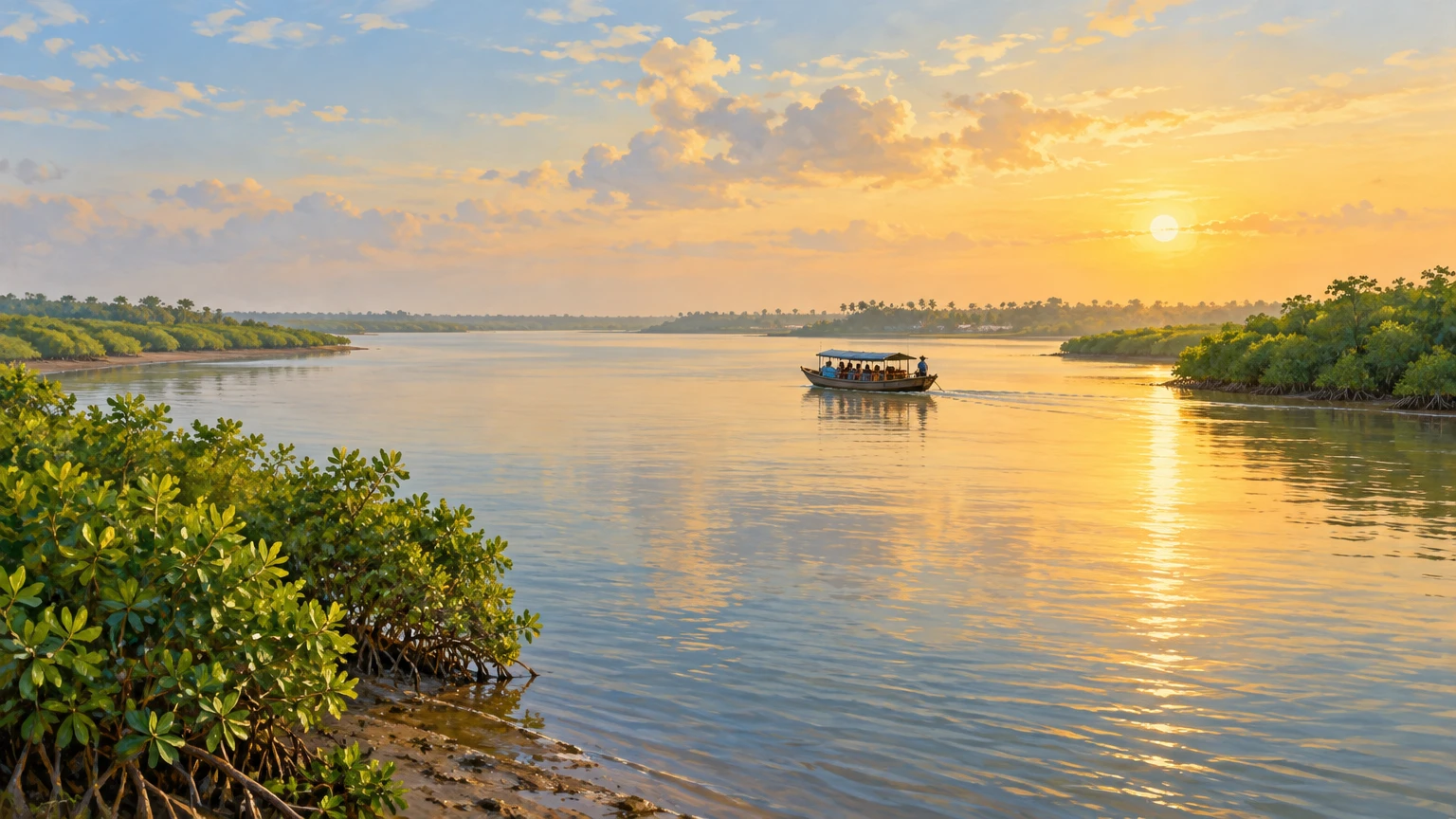
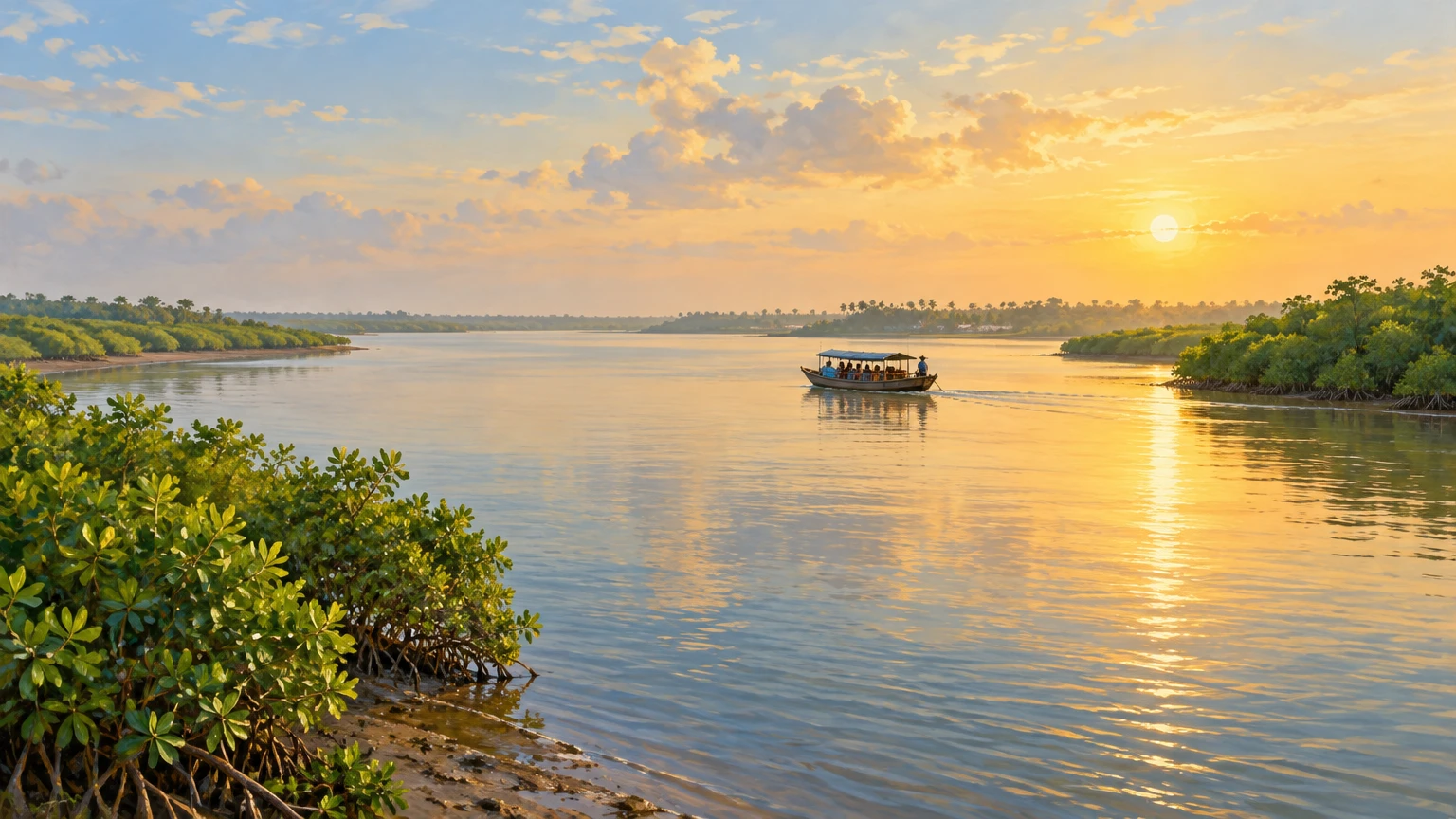
Original AI-generated editorial illustration made for this Bhadrak article, inspired by the tidal river landscape near Chandbali: mangrove edges, a small passenger boat and warm morning light. It is an imaginative illustration, not a documentary photograph or an exact surveyed viewpoint. The image was visually inspected and contains no text, title, overlay or caption. No third-party photograph is republished. Original illustration
Prepared 21 October 2026 as advance app edition 22 October. Intended website publication: 23 October 2026 at 03:30 UTC / 09:00 Asia/Kolkata. Prepared content only; no website scheduling or publication is claimed.
Disclaimer
This content is a collection of ancient history,books and various articles and collection of library and news and other post ; all details may not be the same. Readers are requested to verify the information themselves. Readers are not allowed to take any disciplinary action; content is only for educational purposes. If readers do not agree about the contents, they may send a personal comment to my personal email ID: achary.purna@gmail.com