
Winter as a season of many places
Sita Rutu is often used as a poetic name for winter. The season invites us to notice a change in light, air and work, but no single winter scene represents all of Odisha. Coastal districts, river plains and upland areas experience different conditions, and the same place can change from year to year. The Odisha State Disaster Management Authority describes winter as December to February within a four-season climate framework, while traditional calendars use their own seasonal divisions. These are different ways of describing the year, not a forecast for a particular morning.
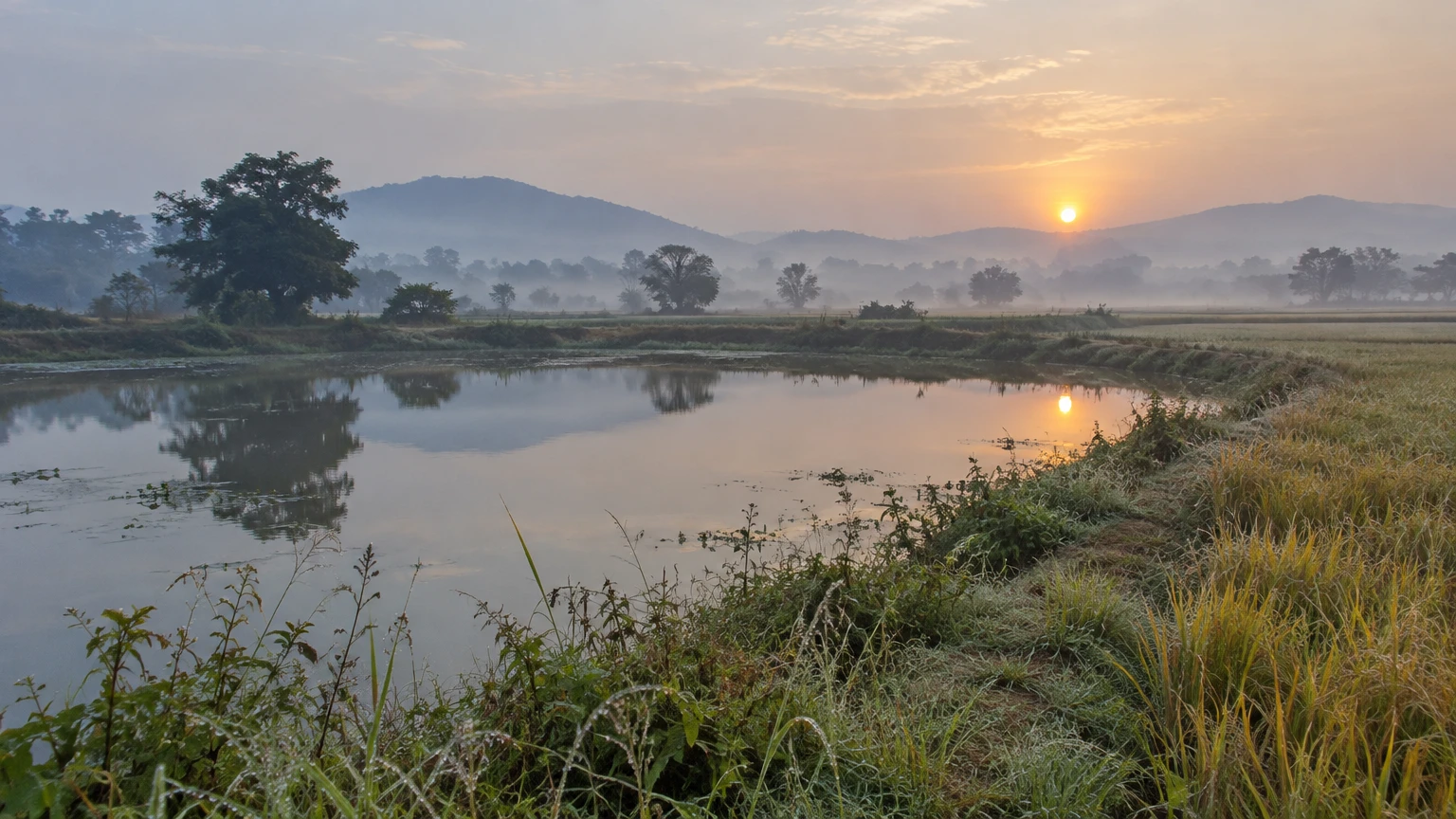
This original reflection takes inspiration from the submitted idea of a winter landscape and classroom memory. It does not claim that one textbook, village custom, crop or household routine was universal in the 1980s. A remembered scene can be meaningful, but historical details need a named place and reliable evidence. Here, the landscape is an imagined scene, not a documentary photograph or a record of one specific village.
A dawn scene, carefully framed
Picture a path beside a pond just after sunrise. A little haze softens the far bank; the water holds a pale reflection, and the day is beginning beyond the edge of the frame. This is a literary image, not a claim that every winter morning is foggy or that every village pond looks the same. Weather is local. To describe an actual day, a writer would need a dated observation or a dependable local forecast.
Winter is sometimes described as quiet, but quiet depends on where one stands. A person may be walking to work, opening a shop, tending a field or beginning household tasks while another observer sees a still landscape. The season contains movement even when the light seems gentle. A careful story leaves room for both perspectives instead of turning rural life into a decorative backdrop.
Fields, crops and the work behind a harvest
Odisha’s agriculture sources distinguish the kharif and rabi cropping seasons. Rice is prominent in kharif cultivation, while rabi crops are more associated with irrigated areas and residual moisture. Official crop lists include pulses, oilseeds such as mustard, and vegetables. This supports a broad observation that some places may have rabi cultivation during the cooler months; it does not mean that every district grows the same crops or that every winter field is yellow with mustard.
What a field looks like depends on soil, water, labor, seed, earlier rainfall and the decisions of the people who cultivate it. One plot may carry a crop while another rests or is being prepared. A visitor sees a view; a farmer knows the choices and uncertainties that produced it. The image of a field at rest can be a useful metaphor, but it should not erase the continuing work behind food and livelihood.
Seasonal writing can honor that work without romanticizing it. Harvest is not only a golden moment: it also involves planning, labor, transport, drying, storage and decisions about what comes next. Outcomes depend on conditions, and no lyrical description can guarantee a good season.
Festivals, food and local meaning
Odisha Tourism’s public event calendar describes Makar Sankranti in connection with the sun’s movement, harvest, charity and spiritual observances. It also mentions traditional foods and practices such as kite flying and visits to water bodies. These are broad descriptions, not proof that every family observes the day in the same way. Dates and local events should be checked against current notices when planning a visit.
Food traditions are especially varied. A dish may have different ingredients or methods from one family or region to another. Rather than presenting one recipe as universal, a future food story could name its source and place, and seek permission when sharing a family’s account. A cultural essay should distinguish what a source documents from what the writer imagines or remembers.
Winter also brings people’s attention to wetlands. Odisha Tourism describes Chilika and Mangalajodi as winter birding destinations. That supports interest in those named places, not a claim that every village pond hosts migratory birds or that visitors will see a particular species on a particular day. Wildlife sightings vary; visitors should follow current local access guidance and avoid disturbing birds.
Memory, poetry and the limits of nostalgia
A schoolbook can preserve a season in memory, but claims about a particular textbook, decade or lesson require the actual edition or other reliable historical evidence. The source essay evokes classrooms of the late 1980s; this article treats that as a prompt for reflection, not a verified description of what all Odisha Board students read or learned. Personal memories can be shared as personal testimony, with the speaker and setting made clear.
Poetry offers another way to meet winter. It can turn a change in light into an image of patience, expectation or rest. Those meanings belong to the writer and reader; no season carries one universal emotional message. The short scene in this article is newly written and is not a quotation or translation from an older Odia poem.
The “silent symphony” of the title is a metaphor. It is the narrator’s way of noticing a soft morning, not a claim that every landscape is silent. The image asks us to look closely while remembering that what we see is only one part of a larger life.
Closing reflection
Sita Rutu can be a doorway into conversations about climate, farming, festivals and memory. The official sources offer useful anchors, while also reminding us that weather, agriculture and observance vary by place. A responsible story does not need to pretend to know every household or every field. It can offer one carefully framed scene, share what its sources support, and leave space for other people’s accounts.
The year keeps turning, but not in exactly the same way for everyone. One morning may hold mist; another may begin under clear skies. A field may be cultivated, fallow or ready for what comes next. In noticing these differences, a seasonal reflection can be both poetic and honest: it can celebrate the beauty of winter without mistaking an image for the whole of Odisha.
Sources and further reading
- Odisha State Disaster Management Authority, State Profile (climate seasons and regional variation): https://www.osdma.org/state-profile/
- Government of Odisha, Department of Agriculture & Farmers’ Empowerment, Disaster Management Plan for Odisha (kharif/rabi and crop context): https://agri.odisha.gov.in/sites/default/files/2021-06/DMP.pdf
- Odisha Tourism, Events & Festivals Calendar (Makar Sankranti): https://odishatourism.gov.in/en/events
- Odisha Tourism, National Chilika Bird Festival (winter wetland and birding context): https://odishatourism.gov.in/en/national-chilika-bird-festival
Disclaimer
This content is a collection of ancient history,books and various articles and collection of library and news and other post ; all details may not be the same. Readers are requested to verify the information themselves. Readers are not allowed to take any disciplinary action; content is only for educational purposes. If readers do not agree about the contents, they may send a personal comment to my personal email ID: achary.purna@gmail.com
