
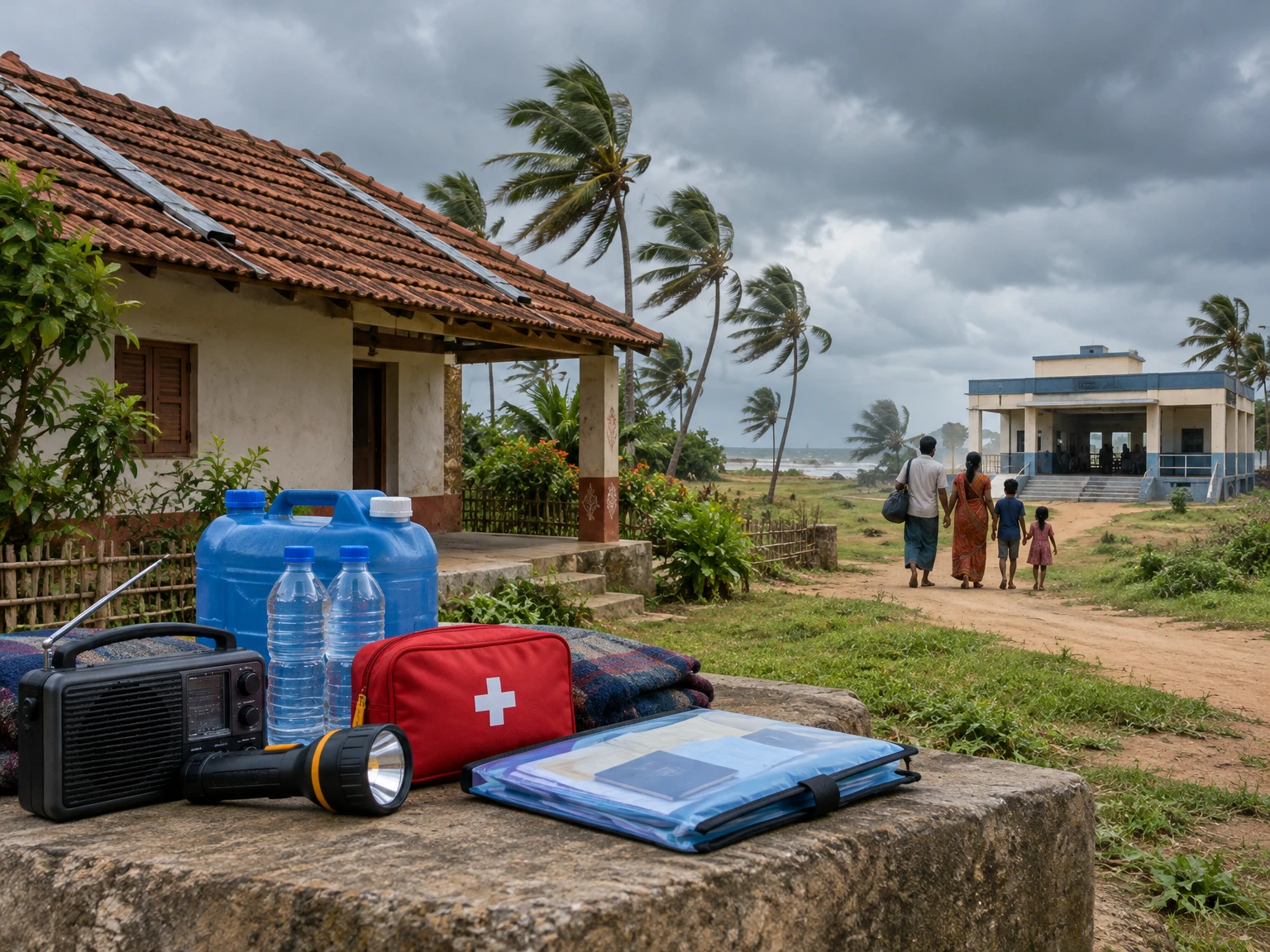
Odisha’s coastline, river deltas, towns and inland hills experience different parts of a cyclone’s impact. The danger is not limited to the place where a storm makes landfall: strong wind can damage roofs and power lines, rainfall can swell rivers and flood low ground, and water pushed ashore can overwhelm coastal areas. Even inland communities may face blocked roads, unsafe bridges, falling trees or interrupted electricity. A useful preparedness plan therefore begins before a warning, follows official instructions as conditions change, and continues until authorities say it is safe to return. This guide explains how households and communities can turn forecasts into practical, calm decisions without treating any general checklist as a substitute for local directions.
Forecasts are time-stamped and can change. On 2 November 2026, India’s Meteorological Department issued a national bulletin about Cyclone Murasu with rainfall and wind forecasts for parts of Odisha. That bulletin is a dated example, not a statement of present conditions or a current travel advisory. For a real event, consult the latest IMD bulletin and Odisha’s official disaster-management and district notices, then follow instructions from the authorities responsible for your exact area. A forecast can describe broad probabilities; local officials decide when a specific road, school, shelter or settlement must close or evacuate.
1. Understand the hazards before the warning
A tropical cyclone is a rotating storm system that may bring several hazards at once. The National Disaster Management Authority (NDMA) describes destructive winds, storm surge, torrential rain and flooding as important risks. Storm surge means seawater rises above the predicted astronomical tide, driven by the storm; it can inundate coastal land and waterways. Rainfall can cause flooding well away from the shoreline, while wind may damage trees, roofs and electrical infrastructure. The mix varies by storm track, speed, land shape, tide, rainfall and local drainage. No single map or headline tells every household what to expect.
Some risks persist after the centre of a storm passes or after winds weaken. Rivers may continue rising as rainwater moves downstream. Waterlogged ground can undermine slopes, and debris can conceal open drains or sharp objects. A fallen power line may remain live. A road that looks passable from a distance can hide a washout, unstable embankment or fast-moving water. NDMA cautions that the danger does not necessarily end at landfall. Treat the storm’s passage as one stage in a longer event, not as a signal that routine travel and outdoor work can immediately resume.
Knowing your setting helps make a plan. Coastal and estuary communities should learn whether local authorities have identified storm-surge or flood-prone areas and where they direct residents to go. People near rivers, canals, low bridges, steep slopes or forested roads should consider how heavy rain, runoff, fallen trees or landslides could affect access. In towns, wind-borne objects, damaged roofs, waterlogged streets and power cuts may matter most. A household does not need to predict the storm. It needs to know which official alert applies to its location, where a safe building or shelter is, and how to reach it using routes that authorities have approved.
Use distinctions carefully. A cyclone watch, warning, rainfall alert, evacuation order and road closure are not interchangeable labels. Each notice has an issuing authority, geographic coverage, time window and recommended response. Read the complete notice rather than relying on a forwarded screenshot or headline. Check the issue time, validity period, named districts or blocks and whether the notice has since been replaced. Avoid repeating unverified claims about a shelter being open, a road being clear or a destination being accessible. If a notice is unclear, seek clarification from the issuing authority or local administration rather than guessing.
2. Make a household plan while conditions are calm
Choose a meeting point and a way for family members to contact one another if mobile networks or electricity fail. Decide who will help children, older adults, people with disabilities, anyone who is ill, and pregnant or lactating people. Identify a strong building or the shelter designated by local authorities, and learn the official route before an emergency. A plan should account for pets and for essential medicines, mobility aids and assistive devices. Do not assume a familiar shortcut will remain usable during heavy rain. Keep the contact information for local emergency and district services where household members can find it without relying on a phone.
Prepare an emergency kit in advance and keep it somewhere easy to reach. OSDMA’s cyclone safety guidance gives examples such as a battery-powered radio, torch and spare batteries, first-aid supplies, essential medicines, drinking water, dry food and waterproof protection for documents. NDMA also lists items such as a water purifier, cash, sturdy footwear and basic tools among possible kit contents. These are examples to adapt to household needs, not a universal official packing list or a promise that every item will be available. Check expiry dates, replace used supplies and consider what a child, a person with a chronic condition or a baby may require.
Store important papers in a waterproof bag and keep copies of essential contact details. If safe and practical, retain a charged power bank and a small battery radio; a phone with a full battery may still lose network service. Keep drinking water and ready-to-eat food in clean, protected storage. Avoid collecting more than your family can carry if evacuation becomes necessary. The aim is to be ready to leave promptly, not to move household possessions at the last minute. Place footwear, a flashlight and keys where family members can locate them in the dark, while keeping walkways free of clutter.
Look around the home before a storm season or warning. OSDMA advises securing loose objects and checking roofs, walls and windows; its guidance also mentions trimming dead branches and clearing loose materials. Do only work that can be completed safely and lawfully. Do not climb onto a roof or approach a weak tree in dangerous wind. Store tools, bins and outdoor furniture so they cannot become airborne. If your area is prone to flooding, ask local authorities what to do about electrical appliances and gas before water enters the building. Keep a written plan accessible to every resident rather than leaving it only on one person’s phone.
Agree on a simple decision sequence. Who checks the latest official notice? Who gathers the kit and medicines? Who checks that neighbors who may need assistance have received the warning, without putting anyone at risk? Who secures the home if authorities have not yet ordered evacuation? Set a clear point at which the household leaves when an official order applies. Practice the sequence once, especially with children, so the first discussion does not happen in a storm. Plans should be adjusted for changed mobility, new medications, temporary visitors or a family member who is away from home.
3. Read official alerts and act on the exact instruction
During an active cyclone, use current official sources rather than old posts or general news summaries. The IMD bulletin should be checked for its timestamp, forecast period, district coverage, rainfall or wind information, and any later update. Odisha’s Special Relief Commissioner and the district administration may issue local directions about evacuation, shelter use, road closures, school operations and public safety. An announcement about one district does not establish conditions in another. A calm-looking sky, a distant forecast cone or a neighbor’s recollection is not a reliable basis for ignoring a current instruction.
On receiving a warning, confirm that everyone in the household understands the next step. Bring in or secure loose items only if conditions make it safe to do so. Charge devices while power is available, store drinking water, prepare the kit, and listen for official updates. OSDMA’s advice is to evacuate areas at risk from a severe-intensity cyclone when authorities direct residents to leave, and to move to a strong building or designated shelter as instructed. Do not wait until roads are flooded or winds are severe to begin an ordered evacuation. Leave early enough to use the approved route, and do not create a private detour.
Follow evacuation instructions even when leaving feels inconvenient or when the weather near home still seems manageable. Officials may be acting on predicted surge, river conditions, slope instability or road failure that is not yet visible to residents. Ask local authorities about accessible transport or assistance if a household member cannot travel safely without help. Do not assume a shelter has available space, food, medical support or pet accommodation unless the responsible authority confirms it. If you cannot reach the named location, contact local emergency authorities for instructions rather than choosing an unverified alternative.
Do not fish, sail or enter the sea during an official warning, and do not attempt to watch waves or photograph floodwater. OSDMA explicitly advises against sea fishing during a cyclone warning. Do not cross a flooded road on foot, in a car or on a two-wheeler; depth, current and road damage can be difficult to judge. Keep away from riverbanks, culverts, drains and damaged bridges. Never touch a fallen wire or a tree in contact with a wire. Report hazards through official channels if it is safe to do so, and keep emergency lines available for urgent need.
Use trusted updates to avoid rumor and panic. Forwarded messages often omit the date, location or issuing authority. Before sharing an evacuation claim, check the official notice and preserve its geographic scope. If a rumor is circulating, do not repeat it as fact even to warn others; share the verified source and the action it actually recommends. Do not make unsupported promises that a particular shelter, hospital or road is operating. Where internet access is intermittent, a battery radio or reliable local official announcements may be useful. Make decisions from the newest available official information, not from a post that happens to be widely shared.
4. Stay safer while sheltering
If instructed to shelter indoors, stay in a sturdy building and away from windows and glass. Follow local guidance about the safest part of the structure; the right location depends on the building and hazard. Keep children close and discourage anyone from going outside to inspect the weather. OSDMA recommends switching off electrical appliances and turning off gas during the storm when it is safe to do so. Do not operate electrical switches while standing in water or when you suspect water has reached wiring. If authorities direct an evacuation, do not substitute an indoor shelter plan for that order.
Keep listening for official updates, but use radio or phone sparingly if battery life is limited. A temporary lull or unusually calm period can occur near the eye of a cyclone; it does not mean the storm has ended. OSDMA warns people not to mistake the eye’s calm for safety and advises waiting for the official all-clear. Do not open doors or leave a shelter because the wind has dropped briefly. Conditions can change quickly, and a second round of dangerous winds may arrive. Let the authority responsible for your area establish when the hazard has passed.
If water begins entering a building, follow local emergency instructions and move to a safer place only if there is a known, safe route. Do not enter floodwater to retrieve belongings. Water can conceal drains, debris, open manholes, electrical hazards or a strong current. Do not use a generator, charcoal burner or fuel-powered equipment inside a home or other enclosed area; exhaust can be dangerous. Keep children away from water and damaged structures. If anyone is injured or trapped, contact emergency services and follow their directions rather than attempting a rescue that could place additional people in danger.
At a shelter, follow the staff’s directions and keep routes and entrances clear. Respect privacy and the needs of others. Share accurate information without spreading unconfirmed reports. Keep medicines and personal documents protected, and tell shelter staff about urgent health, mobility or safety needs. Do not assume that all shelters have the same services; public notices and on-site instructions govern. Odisha’s official disaster-management site describes multipurpose cyclone and flood shelters, but the existence of a shelter programme does not establish that any particular facility is open, accessible or suitable during a specific event. Verify the location and instructions locally.
5. Wait for the all-clear and recover carefully
Do not return home, resume work or travel for sightseeing until authorities issue appropriate guidance. NDMA’s cyclone advice stresses waiting for the “All Clear,” using recommended roads and approved transport, and taking account of power lines, drinking water, sewage and health concerns. The fact that rain has stopped or a nearby road appears open does not establish that the route is safe. A bridge may be weakened, a hillside may still be unstable, or water may conceal a damaged surface. Follow local closures and respect barriers; never remove them or drive around them.
When authorities permit a return, approach damaged buildings carefully. OSDMA advises people to watch for fallen power lines, damaged bridges and trees, and to avoid wet electrical appliances. If you smell gas or suspect a leak, do not light a match or operate electrical switches; move away and contact the appropriate service from a safe location. Do not touch electrical equipment that has been wet until a qualified person has checked it. Avoid standing water where electrical wires may be present. Photograph damage only from a safe place and follow official instructions for reporting or assistance.
Floodwater can carry sewage, chemicals, sharp debris and disease-causing organisms. Do not drink water whose safety is uncertain. Follow public-health advice about boiling, treatment or alternate supplies, and heed official instructions if water systems have been contaminated. Wash hands with clean water and soap when available, and keep food away from floodwater. Do not allow children to play in standing water. If household members develop serious symptoms, seek medical advice or emergency care. Avoid making medical claims based on rumors; public-health authorities and clinicians are the appropriate sources for treatment decisions.
Recovery also requires attention to neighbors and community infrastructure. Check on people who may need help only when it is safe and does not violate official restrictions. Report blocked roads, damaged public facilities, hazardous wires and urgent medical needs to the relevant authorities. Do not obstruct emergency teams, take supplies from a relief point without authorization or enter a damaged public building. Support should be coordinated through verified local channels. Community members can help by sharing official notices, checking on vulnerable residents before the storm, and keeping access routes clear, not by improvising risky rescue missions during dangerous conditions.
Keep records of expenses, damage and official communications if doing so is safe and useful. Do not publish another person’s private information or photographs without permission. Ask the local administration about relief eligibility and required documentation rather than assuming that a particular benefit is available. Recovery timelines differ from place to place. A public announcement that a review or repair has begun is not proof that a road is fully repaired or that every household has received assistance. Distinguish confirmed services from plans, and use dated notices when sharing information with family or neighbors.
6. Make preparedness inclusive and realistic
Preparedness works best when it includes the people who will use it. Ask household members what would make evacuation or sheltering difficult, and adapt the plan without treating disability, age or illness as a problem to be solved by one person alone. Identify who can help carry mobility equipment or medicines, and how to keep assistive devices charged or protected. Do not separate children from caregivers unless authorities direct otherwise. Families with infants may need specific feeding, hygiene and temperature arrangements; discuss these with a clinician or local support service rather than relying on a generic list.
Language and communication access matter. Share warnings in forms household members can understand, while preserving the original source and time. For people who are deaf or hard of hearing, agree on a way to receive alerts that does not rely solely on audible radio or sirens. For people who are blind or have low vision, keep paths clear and identify accessible assistance in advance. If a family member cannot use a smartphone, write down the meeting point, emergency contact and shelter instructions. Ask local authorities how accessible transport or shelter arrangements are handled; do not assume a provision exists without confirmation.
People should not be pressured to disclose sensitive health information in public groups. A family plan can identify practical support without broadcasting diagnoses. Respect the self-determination of residents and the decisions of local communities. Visitors, tourists and people away from home should follow the same official area instructions as residents, and should not use a disaster as a reason to visit restricted places. Avoid posting photographs of evacuees, injured people or private homes without consent. Dignity and safety remain important during emergencies, not only after the immediate threat has passed.
Preparedness should be affordable. Start with the most useful basic supplies and a clear plan rather than buying expensive equipment or a large collection of items that may never be used. A battery radio, torch, necessary medicine, drinking water, dry food and waterproof document storage are among official examples; local authorities can advise on what is most relevant for a household. Check what is already available at home and replace what has expired. Do not borrow money or take on financial obligations because of an unverified advertisement promising cyclone protection or guaranteed evacuation.
7. A short checklist for the next official notice
When a new notice arrives, pause and verify five points: who issued it; when it was issued; which areas it names; when it applies; and exactly what action it requests. Then check the latest update rather than assuming the first bulletin remains current. Tell household members the confirmed instruction. If evacuation is ordered, take the essential kit and use the approved route. If sheltering is instructed, stay in the designated safe place. If conditions change or the notice is unclear, contact the local authority. Do not use a general online article, including this one, to override a specific official direction.
After the immediate hazard, keep checking for an official all-clear and any separate information about roads, drinking water, electricity, schools and public services. These systems may recover at different times. Do not infer that a district-wide announcement applies identically to every neighborhood. Before travel, confirm that the destination and route are open. If you see a hazard, report it safely and avoid the area. Once conditions permit, review the household plan and replace supplies used during the event. Small improvements made after a warning can make the next response calmer.
Preparedness is a shared practice rather than a single purchase or dramatic action. It means knowing where reliable warnings come from, keeping a modest kit ready, making a plan for people and pets, following evacuation and shelter instructions, and waiting for confirmation before returning. Odisha’s official services and the district administration are the authorities for current, location-specific instructions; IMD provides weather forecasts and warnings. The sources below support this educational overview, but their publication dates and scope matter. Always open the latest official notice for your area and follow the instructions issued for the event in progress.
Sources and further guidance
- India Meteorological Department, National Bulletin No. 12, Cyclone Murasu, 2 November 2026, 09:00 IST — a dated forecast bulletin, included as an example of time-bounded information, not a live update.
- Odisha State Disaster Management Authority, Cyclone Safety Tips — household preparation, warnings, evacuation, sheltering and post-cyclone precautions.
- Odisha State Disaster Management Authority, Multipurpose Cyclone and Flood Shelters — programme information; confirm individual shelter status locally.
- National Disaster Management Authority, Cyclone — cyclone hazards, preparedness and return-after-all-clear guidance.
- National Disaster Management Authority, Pocket Book of Do’s and Don’ts.
This content is a collection of ancient history,books and various articles and collection of library and news and other post ; all details may not be the same. Readers are requested to verify the information themselves. Readers are not allowed to take any disciplinary action; content is only for educational purposes. If readers do not agree about the contents, they may send a personal comment to my personal email ID: achary.purna@gmail.com
